
Portfolio venture
Memorystim logo

MemoryStim

MemoryStim is a biotechnology leader dedicated to developing non-invasive bioelectric wearables that improve short and long-term memory. We utilize patented signaling sequences to activate memory-enhancing proteins, aiming to reverse age-related decline and boost cognitive performance in individuals of all ages.

Contact
Get in touch

(424) 291-2133

18575 Jamboree Rd #6, Irvine, California, United States of America 92612

Open in Maps
/ – THE COMPANY

About this Venture

Discover our background, mission, and the world-class research driving our next-generation medical technology.

Research Premise

Our research is based on the promise and premise that perhaps age-related memory decline is not unchangeable. We also believe in the promise that it may be possible to boost the memory capability of normal functioning younger people as well.

Scientific Evidence and Graphical Abstracts

Refer to the detailed study results and abstracts provided in the technology and reference sections regarding IGF-1, IGF-2, PDGF, Sonic Hedgehog, Neurogranin, FMRP, SDF-1, GDF-10, GDF-11, and Klotho which establish the scientific foundation for MemoryStim’s market and product potential.

Strategic Vision

MemoryStim is dedicated to the clinical application of bioelectric signaling to combat cognitive decline. By targeting specific protein expressions like Klotho and IGFs, which have shown to enhance cognition independent of age, the company is positioning itself at the forefront of the longevity and neuro-enhancement market.

/ A - Our Team

Our Team

  • Portrait Placeholder

    Howard J. Leonhardt

    Executive Chairman & CEO

  • Portrait Placeholder

    Dr., 

    Leslie Miller

    Chief Medical Officer

  • Portrait Placeholder

    Dr., 

    Santosh Kesari

    Chief Neuro Medical & Scientific Advisor

  • Portrait Placeholder

    Dr., 

    Jorge Genovese

    VP Bioelectric Research

  • Portrait Placeholder

    Jeremy Koff

    VP Strategic Development

  • Portrait Placeholder

    Jon Dillon

    VP Mergers and Acquisitions

  • Portrait Placeholder

    Kelsie Leonhardt

    Staff Neuroscientist Researcher

  • Portrait Placeholder

    Dr., 

    Cristiane Carboni

    Research Coordinator Brazil

  • Portrait Placeholder

    Paul Norman

    Managing Partner Innovation Accelerator

  • Portrait Placeholder

    Sukaina Alarakhia

    Financial Analyst

  • Portrait Placeholder

    Kim Medina

    Accounting Supervisor

  • Portrait Placeholder

    Sejal Chaudhari

    Bioengineer R&D Lab Co-Manager

  • Portrait Placeholder

    Jay Hydren

    Research Associate

  • Portrait Placeholder

    Allen Turner

    Chief Patent Counsel

  • Portrait Placeholder

    Bruce Methven

    Chief Securities Counsel

/ – THE TECHNOLOGY

The Technology behind it

Discover the science and innovation driving our advanced solutions, designed to deliver safe, effective, and transformative results.

MemoryStim: The World’s First Body-to-Brain Stimulator Wearable

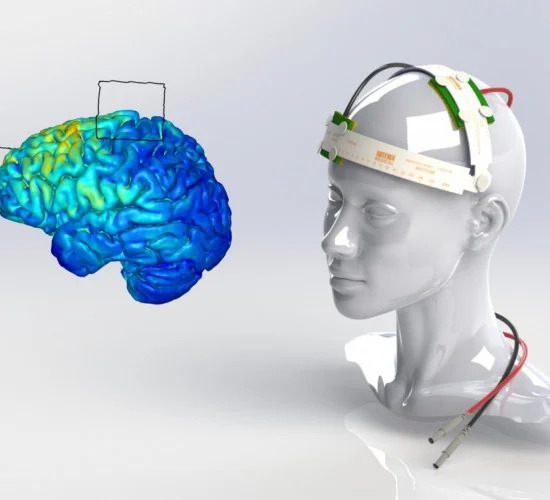
MemoryStim is preparing to launch a new head and body wearable which will be the first body > brain-stimulator designed to activate specific memory enhancing protein expressions on demand via precise patented and patent pending bioelectric signaling sequences. The bioelectric signaling sequences in pulses are delivered non-invasively to the parts of the brain responsible for learning and memory. The wearable device under development is intended to improve cognitive performance and memory.

MemoryStim product

The Science of Neuro-Regeneration: Targeted Protein Expressions

Some of the patented and patent-pending intended target memory-enhancing protein expressions of the MemoryStim device include:

  • IGF1 and IGF2: The IGFs cross the blood-brain barriers and have endocrine roles in brain.
  • SDF and PDGF: Essential stem cell homing factors for tissue repair.
  • GDF10 and GDF11: Critical brain regeneration promoting proteins.
  • Angiogenesis Multi-Complex (VEGF, SDF1, PDGF, EGF, HIFa, eNOS): New blood vessel formation promoting proteins via a tightly regulated process that involves the proliferation, migration, differentiation, and organization of endothelial cells into new functional microvessels.
  • Sonic Hedgehog (Shh): Results suggest that fear learning induces Shh signaling activation in the amygdala, which promotes neurogenesis and fear memory formation.
  • Klotho: A powerful longevity factor that enhances brain cognition.
  • Neurogranin (Ngrn) and FMRP: Memory formation is associated with a singular increase in mRNA levels of the gene Ngrn, which codes for a protein called neurogranin; further investigation revealed that another protein, called FMRP, is also critical.

Memorystimdevice

Advanced Mechanism: Amplifying Brainwave Patterns for Memory Retention

The researchers discovered that memory formation is associated with a singular increase in mRNA levels of the gene Ngrn, which codes for a protein called neurogranin, which was first linked to memory formation in 2017. When they blocked production of neurogranin in mice, the rodent struggled to form new memories when encountering a new location. If neurogranin was added back in, this effect was reversed.

Thus, formation of experience-related memories appears to rely on rapid production of high levels of neurogranin, but further investigation revealed that another protein, called FMRP, is also critical. The new device is designed to deliver with precision timing the most beneficial bioelectric signaling sequences exactly in the patterns they are needed when they are needed. Amongst other things the bioelectric signaling sequences are intended to amplify brainwave patterns responsible for recording memories.

Brainwave Patterns

Usage Protocol

The MemoryStim team envisions that the user will simply wear the head wearable for 30 minutes a day to improve memory and may be used for 15 minutes just prior to a learning experience to help boost the ability to retain the material learned in memory.

/ ? — FAQ

Common questions

Don’t see your question? Reach out and our clinical team will respond personally.

Bioelectric therapy for improving memory based on controlled memory enhancing protein expressions such as klotho.

Bioelectric therapy combined repeat injections or infusions with with stem cells, PRF, exosomes, oxygenated nanoparticles, Wharton’s Jelly, amniotic fluid, micro RNA gel, nutrient hydrogel, selected alkaloids such as tetraharmine, klotho, selected growth factors SDF1, PDGF, IGF1, GDF10, GDF11, LIM, Sonic Hedgehog, nerve growth factor, COL17A1, tropoelastin, follistatin and MHP1 for memory enhancement.

Bioelectric therapy combined with repeated infusions or injections of regenerative fluid such as amniotic fluid, PRF or selected exosomes and heat shock treated mesenchymal stems cells.

Our MemoryStim team has not yet conduced any of our any clinical studies yet but numerous papers including this one document the role klotho may play in improving memory – Click Here

Our MemoryStim team has not yet conduced any of our any clinical studies yet but numerous papers including this one document the role IGF1 may play in improving memory – Click Here

Our MemoryStim team has not yet conduced any of our any clinical studies yet but numerous papers including this one document the role Sonic Hedgehog may play in improving memory – Click Here

Our MemoryStim team has not yet conducted any of our own clinical studies yet. Other independent investigational teams have completed and published studies such as this one – Click Here

Our MemoryStim team has not yet conduced any of our any clinical studies yet but numerous papers including this one document the role SDF1 and PDGF may play in improving memory – Click Here

Our MemoryStim team has not yet conduced any of our any clinical studies yet but numerous papers including this one document the role HGF may play in improving memory – Click Here

/ – KNOWLEDGE BASE

Related resources

Want to learn more? Browse our clinical resources and scientific publications on our comprehensive suite of targeted treatments.

Growth Factors & Tissue Regeneration (IGF, PDGF, SDF-1)

This collection focuses on essential growth factors and signaling proteins that drive cellular repair, stem cell homing, and cognitive recovery following brain injury or ischemia.

IGF-1 for Brain Injury Recovery

Study showing how Insulin-like Growth Factor-1 improves both motor and cognitive outcomes after experimental brain trauma.

View details
PDGF and Cell Migration

Research on how Platelet-Derived Growth Factors interact with glycosaminoglycans to stimulate cell proliferation and migration for tissue repair.

View details
SDF-1 in Neuronal Regeneration

Investigating the critical role of the SDF-1/CXCR4 axis in promoting neural healing after cerebral ischemia.

View details
Vascular Protection via SDF-1

Evidence that Stromal Cell-Derived Factor 1 protects brain vascular endothelial cells from radiation-induced damage.

View details

Longevity & Cognitive Enhancement Proteins (Klotho & GDF)

These studies highlight “longevity hormones” and differentiation factors that counteract age-related memory decline and enhance overall brain resilience.

GDF-11 and Age-Related Memory

Research demonstrating how GDF-11 can counteract short-term memory impairments in middle-aged models.

View details
Hippocampal Improvement via GDF-11

Clinical evidence of neuronal and vascular improvements in the aged hippocampus following GDF-11 treatment.

View details
Klotho and Brain Resilience

A study on how peripheral elevation of Klotho fragments enhances function in young and aging brains.

View details
The Life Extension Factor

Research showing that the Klotho hormone significantly boosts cognition and synaptic plasticity.

View details
Klotho and Immune Interface

Understanding how Klotho controls the interface between the brain and the immune system via the choroid plexus.

View details

Neurogenesis & Synaptic Mechanisms (Sonic Hedgehog & Neurogranin)

Focusing on the molecular triggers of memory formation, including genes that control brain repair and proteins that stabilize synapses.

Sonic Hedgehog & Memory Formation

Discovery that fear learning induces Shh signaling, which is essential for neurogenesis and long-term memory.

View details
Neurogranin as a Synaptic Marker

Evidence that the protein Neurogranin is associated with memory performance independent of Alzheimer’s biomarkers.

View details
The Brain Repair Gene

Scientists identify specific genes that act as “master switches” for controlling brain tissue repair.

View details
Human Genes and Brain Expansion

Research regarding human genes triggering increased brain growth and complexity.

View details

Bioelectric & Magnetic Brain Stimulation

Clinical trials and studies proving that targeted electrical and magnetic stimulation can “reboot” memory, reverse loss, and improve cognitive sync.

Reversing Brain Aging

Research showing how electrical stimulation can make old brains function with the speed and accuracy of young brains.

View details
Boosting Memory in Seniors

Clinical findings on how non-invasive stimulation helps older adults recover memory function.

View details
Hippocampal Encoding Enhancement

Direct evidence that stimulating the hippocampus during learning enhances subsequent memory recollection.

View details
The "Tickling" Effect

Mayo Clinic study showing that “tickling” the brain with low-level electricity improves memory performance.

View details
Amygdala Stimulation

Research confirming that long-term memory can be enhanced by targeted stimulation of the amygdala.

View details
Deep Brain Stimulation without Surgery

New methods using electric fields to reach deep brain structures non-invasively.

View details
Electricity and Cognitive Health

Psychology Today analysis on the benefits of low-current electricity for brain optimization.

View details
Gentle Short-Term Memory Boost

IEEE Spectrum report on how mild stimulation protocols significantly improve short-term recall.

View details
Clinical Success Stories

News coverage of broad studies proving the effectiveness of electrical stimulation on memory.

View details
Alzheimer’s Reversal Wearable

Evidence from NeuroEM Therapeutics regarding a wearable head device that reversed memory loss in Alzheimer’s patients.

View details
Magnetic Memory Reboot

Research on using magnetic fields to target and enhance cortical-hippocampal networks for better associative memory.

View details
Cortical-Hippocampal Network Enhancement

Original scientific paper on using non-invasive stimulation to target associative memory networks.

View details

CAUTION Disclaimer and Warning: Products described on this web site are in early stage development and are not yet proven safe or effective in statistically significant controlled clinical studies. Any statement or phrases implying efficacy or safety in any form are considered modified by “intended to” or “designed to”. Investigational use only in countries where investigation is permitted by law and proper filings have been made and appropriate regulatory clearances have been granted. Any use of the product(s) must be in an authorized clinical study with institutional review board (ethics committee) approval and proper patient consent procedures followed. For other countries product is only available for laboratory investigation by credentialed institutions and investigators with proper clearances with a research agreement in place with a study sponsor. NOT AVAILABLE FOR SALE.

Join the Future of Memory

Start with a consultation.

Take the first step towards better results in less time. Whether you are an individual looking to boost your memory capability or a clinical partner wanting to offer the latest bioelectric technology to your clients, our team is here to help you get started with MemoryStim.

Book a Consultation