
RESEARCHER VERIFICATION:
Lionheart Peptides sells premium research peptides exclusively to qualified researchers and laboratories for in vitro and laboratory use – not for human or animal consumption.
All products on this website are sold strictly for Research Use Only – not for human, animal, clinical, or therapeutic use. Customers are responsible for compliant, properly authorized handling of all products and associated risks.
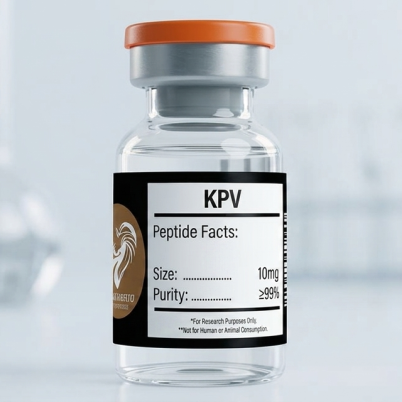
KPV
Regular Price$56.00
Three-amino-acid peptide for inflammatory and cellular research
KPV is a three-amino-acid peptide fragment derived from Alpha-Melanocyte-Stimulating Hormone (α-MSH). It is investigated in laboratory research involving inflammatory signaling, immune modulation, wound-healing processes, intestinal barrier pathways, and cellular stress.
Key Product Facts
- CAS Number: 67727-97-3
- Molecular Formula: C16H30N4O4
- Molecular Weight: 342.43 g/mol
- Appearance: White Powder
- Storage: 2–8°C
- Purity: ≥99% stated purity
- Available Size: 10mg
We accept

About KPV
KPV is a three-amino-acid peptide fragment derived from α-MSH. Laboratory research investigates KPV in relation to inflammatory signaling and immune-modulating pathways, including research involving NF-κB activity, pro-inflammatory cytokine signaling, wound healing, intestinal barrier function, and cellular inflammatory stress.
Key Highlights
- Three-amino-acid peptide fragment
- Derived from α-MSH
- Studied in inflammatory signaling research
- Investigated in immune modulation pathways
- Research involving NF-κB signaling
- Studied in wound-healing and intestinal barrier research
- 10mg size
- ≥99% stated purity
- White powder
- Storage at 2–8°C
Additional Details
Specifications
CAS Number: 67727-97-3
Molecular Formula: C16H30N4O4
Molecular Weight: 342.43 g/mol
Appearance: White Powder
Storage: 2–8°C
Purity: ≥99%
What’s Included
- 1 vial of KPV
- 10mg
Research Use Notice
All products featured here are intended exclusively for research and development purposes. They are not designed for human or animal consumption and have not undergone evaluation by the U.S. Food and Drug Administration.