

Clinical programs combine bioelectric signaling, neuromuscular stimulation and regenerative-health technologies designed to support cognition, physical performance and healthy aging
HUNTINGTON BEACH, Calif. — August 14, 2026 — Lionheart Health, Inc., a regenerative health and longevity technology company developing bioelectric and multimodality therapies, today announced clinical results from its Brain Band™ brain-health program and additional brain and functional-health findings associated with BodStim™ electrical muscle stimulation, including clinical research conducted in Brazil with Dr. Carla Malguti Federal University Brazil and collaborators.
The results add to Lionheart Health’s growing body of research investigating how targeted electrical stimulation and complementary regenerative technologies may influence biological pathways associated with brain health, muscle performance, circulation, inflammation and healthy aging.
“We believe brain health and physical health should not be treated as separate systems,” said Howard J. Leonhardt, Founder, Executive Chairman and Co-CEO of Lionheart Health. “Our development strategy is focused on technologies designed to stimulate the body’s own regenerative signaling while simultaneously improving muscle function, circulation and metabolic health. The Brain Band and BodStim clinical programs are important components of that strategy.”
Brain Band™ Clinical Results
Lionheart Health’s Brain Band™ program combines targeted bioelectric stimulation with a broader brain-health protocol designed to support regenerative signaling and cognitive performance.
Across Lionheart Health’s early clinical research and observational datasets, reported outcomes have included improvements in measures associated with:
- Memory: approximately 12%–34% improvement
- Attention and cognitive performance: approximately 15%
–30% improvement - Mood-related measures: approximately 18%–
35% improvement - Stress-related measures: approximately 15%–
45% improvement - BDNF: increases of approximately 133%–296% in selected measurements
- Klotho: increases reaching approximately 423% in selected measurements
- Participant response rates: approximately 80%–88%
in selected study measures
The Brain Band™ research program is particularly focused on the controlled bioelectric expression or modulation of regenerative proteins and signaling pathways associated with brain health, including BDNF, Klotho and GDF10.
BDNF — brain-derived neurotrophic factor — is associated with neuronal survival, synaptic plasticity, learning and memory.
Klotho is an extensively studied longevity-associated protein linked in published scientific literature with healthy aging and neurological function.
GDF10 is being investigated for its potential role in neural repair and regenerative signaling.
Lionheart Health is developing Brain Band™ as part of a broader multimodality brain-health platform that may incorporate bioelectric signaling, photobiomodulation, PEMF, BodStim™-enhanced exercise, nutrition, sleep optimization and selected nutritional supplementation.
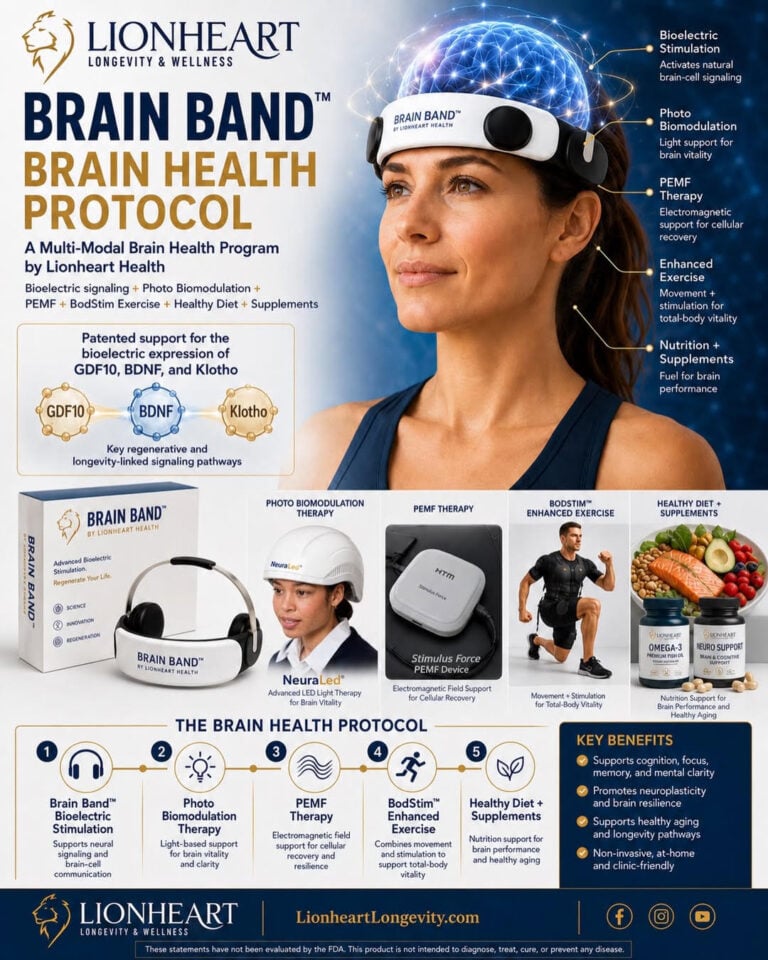
New Lionheart Health Multi-Modality Brain Health Protocol
Lionheart Health’s new Multi-Modality Brain Health Protocol™ is designed as a physician-guided, investigational program that addresses brain health from multiple directions rather than relying on a single stimulation technology. The protocol combines Brain Band™ programmable bioelectric stimulation, photobiomodulation, PEMF/electromagnetic therapy, BodStim™ enhanced exercise, metabolic and nutritional optimization, sleep and breathing optimization, cognitive testing and biomarker monitoring. Lionheart’s current Brain Health Protocol describes the objective as supporting cognition, mood, memory and neuroplasticity while investigating pathways associated with BDNF and Klotho.
Optional Second Brain™ Gut–Brain Health Study Arm
An optional arm of Lionheart Health’s new Multi-Modality Brain Health Clinical Study is planned to evaluate the company’s Second Brain™ bioelectric gut-stimulation platform as an additional component of the protocol. The investigational arm will explore whether targeted non-invasive electrical stimulation directed toward the gastrointestinal region can support gut function and the microbiota–gut–brain axis, and whether resulting changes are associated with measurable improvements in brain-health, cognitive, mood, inflammatory, metabolic or healthy-aging endpoints. The scientific rationale reflects growing evidence that the gastrointestinal system communicates bidirectionally with the brain through neural pathways including the vagus nerve, immune and inflammatory signaling, microbial metabolites, endocrine signaling and other mechanisms. Where feasible, the study may incorporate microbiome and gastrointestinal-health assessments alongside cognitive testing, inflammatory and metabolic biomarkers, and selected regenerative or healthy-aging biomarkers. Second Brain™ would therefore provide a complementary gut-to-brain component to the broader protocol combining Brain Band™ bioelectric signaling, photobiomodulation, PEMF, BodStim™ enhanced exercise, nutrition, supplementation, sleep and lifestyle optimization. This optional arm is investigational and is intended to determine whether adding gut-directed stimulation provides measurable incremental benefit beyond the core multimodality brain-health protocol.
1. Brain Band™ Targeted Bioelectric Stimulation
At the center of the protocol is Brain Band™, Lionheart Health’s non-invasive programmable brain-stimulation platform.
Brain Band™ programming may incorporate:
- DepressiStim™ — investigated for mood and related brain-health measures.
- MemoryStim™ — designed for research into memory and cognitive performance.
- CerebraCell™ — next-generation multi-protein regenerative signaling research.
- AddictiStim™ — investigational programming directed toward neurological pathways associated with addictive behavior.
- Klotho-focused stimulation — being investigated for healthy brain aging and resilience.
Lionheart has reported early human Brain Band™ research in Brazil demonstrating improvements in cognition, memory and mood measures and reductions in depression-related symptoms. The company’s public materials also describe preclinical development followed by a seven-month UCI Capstone engineering project.
2. Bioelectric Regenerative Protein Signaling
A major differentiator of the platform is Lionheart’s research into frequency-specific bioelectric modulation of endogenous regenerative proteins rather than electrical stimulation alone.
The developing brain portfolio includes signaling targets such as BDNF, GDF10, Klotho, Sirtuins, Sestrins, Menin, SDF-1/CXCL12, PDGF, VEGF, eNOS, IGF-1, Apelin, HMGB1, GDF11 and additional pathways.
The recently filed CerebraCell™ provisional patent describes an investigational platform incorporating programmable modulation of more than 60 regenerative proteins and pathways.
The biological strategy can be summarized as:
Neuroplasticity + neuronal support + stem-cell homing + vascular support + inflammation management + healthy-aging signaling.
3. Photobiomodulation — Red/Near-Infrared Light
Photobiomodulation (PBM) is incorporated as a complementary non-invasive modality. Lionheart’s current protocol includes red-light treatments as part of its brain-health program.
The research rationale is to complement bioelectric signaling by supporting mitochondrial and cellular-energy pathways rather than depending upon a single mechanism.
4. PEMF and Electromagnetic Brain Support
Pulsed electromagnetic field therapy (PEMF) and related electromagnetic modalities provide another component of the protocol. Lionheart currently identifies PEMF/electromagnetic stimulation among its Brain Health Protocol interventions.
The intent is to investigate whether electromagnetic conditioning can complement Brain Band™, PBM and whole-body interventions in supporting neurological resilience and recovery.
5. BodStim™ Enhanced Exercise — The Muscle/Brain Connection
A key feature is that the protocol does not treat the brain in isolation.
BodStim™ combines whole-body neuromuscular electrical stimulation with exercise, activating multiple large muscle groups. Lionheart’s published BodStim materials report improvements in functional measures and continued investigation of Klotho responses to whole-body muscle stimulation.
This creates a second pathway into the brain-health strategy:
BodStim™ → muscle contraction + exercise → systemic metabolic/myokine signaling → circulation and healthy-aging pathways → brain support.
Brain Band™ and BodStim™ therefore approach brain health from two complementary directions: targeted neurological stimulation and whole-body muscle/exercise stimulation.
6. Nutrition, Supplements and Metabolic Optimization
The protocol incorporates a personalized nutrition program emphasizing a Mediterranean-style, anti-inflammatory dietary pattern together with individualized supplementation where clinically appropriate.
Lionheart’s current program includes nutrition counseling, customized supplements and meal-planning support.
This component is intended to address the metabolic environment in which the brain operates—including glucose regulation, vascular health, body composition, micronutrient status and the gut-brain axis.
7. Sleep, Breathing and Autonomic Optimization
Sleep quality, breathing and autonomic balance are treated as important components rather than secondary lifestyle recommendations.
The broader Lionheart neurological protocols incorporate sleep analysis, breathing assessment, relaxation approaches, Brain Band™ relaxation programming and other interventions designed to support recovery and autonomic balance.
8. Optional Advanced Recovery Modalities
Depending upon the individual protocol and appropriate medical supervision, additional modalities may include hyperbaric oxygen therapy, infrared sauna, cold therapy, vibration therapy and other circulation/recovery interventions. Lionheart’s current Brain Health Protocol lists several of these as complementary interventions.
These modalities should be viewed as adjuncts to the core program rather than evidence that their combination has been clinically proven to reverse neurological aging.
9. Precision Diagnostics and Objective Measurement
The protocol begins and ends with measurement.
Lionheart’s current program describes assessments including:
- Cognitive and mood testing
- Klotho measurement
- Broad blood-biomarker testing
- MRI/imaging where appropriate
- Body composition and physical-performance measurements
- Sleep and breathing analysis
- Gut and oral microbiome evaluation
- Hearing assessment
The goal is to determine whether an intervention produces measurable changes, rather than relying only on subjective reports of feeling better.
The Integrated Lionheart Approach
The new protocol can therefore be presented as a coordinated system:
Brain Band™ bioelectric signaling
+ PBM photobiomodulation
+ PEMF/electromagnetic stimulation
+ BodStim™ enhanced exercise
+ nutrition and supplementation
+ sleep and breathing optimization
+ metabolic/inflammation management
+ precision diagnostics and cognitive testing
From Brain Stimulation to Whole-Body Brain Health
Lionheart Health’s central hypothesis is that maintaining brain function with aging may require simultaneously addressing neuronal signaling, neuroplasticity, circulation, mitochondrial function, inflammation, muscle health, metabolism, sleep and systemic longevity biology.
Rather than positioning Brain Band™ as a stand-alone device, the new protocol positions it as the neurological centerpiece of an integrated brain-health system, with BodStim™ addressing the muscle-brain connection and complementary modalities supporting the biological environment surrounding brain function.
The program remains investigational for medical indications. Individual components have different levels of clinical evidence and regulatory status, and the combined multimodality protocol itself should not be represented as proven to prevent, treat or reverse depression, dementia, Alzheimer’s disease, stroke or other neurological disorders without indication-specific clinical and regulatory support.
BodStim™: Connecting Muscle Health and Brain Health
Lionheart Health also announced results supporting the company’s strategy of using BodStim™ electrical muscle stimulation to simultaneously address physical conditioning and biological factors associated with healthy brain aging.
BodStim™ is designed to activate large muscle groups through controlled electrical muscle stimulation while participants perform supervised or structured exercise.
Across Lionheart Health-associated BodStim™ research involving approximately 60 participants, reported outcomes have included:
- Muscular strength: approximately 15%–
25% improvement - VO₂/aerobic-performance measures: approximately 10%–
18% improvement - Lean-mass measures: approximately 8%–14% improvement
- Body-fat measures: approximately 5%–12% reduction
- CRP/inflammatory measurements: approximately 15
%–30% reduction - Klotho: increases ranging approximately 15%–230% in selected measurements and participant groups
Lionheart Health believes these findings are important to brain-health development because muscle activity can influence circulation, metabolism, inflammatory signaling and the release of myokines and other signaling molecules associated with systemic and neurological health.
Dr. Carla Malguti Brazil Clinical Research
Clinical research in Brazil involving Dr. Carla Malguti and collaborators evaluated electrical muscle stimulation and related functional outcomes, contributing to Lionheart Health’s development of its BodStim™ approach.
The research supports the company’s broader hypothesis that appropriately programmed electrical stimulation may produce benefits extending beyond isolated muscle contraction.
Lionheart Health is incorporating lessons from the Brazil research into the continuing development of protocols designed to measure both physical and cognitive outcomes, including strength, functional performance, exercise capacity and biomarkers associated with healthy aging.
The company intends to continue expanding clinical evaluation of the relationship between muscle stimulation, circulating regenerative factors, Klotho, BDNF, inflammation and cognitive performance.
A Muscle–Brain–Longevity Strategy
Lionheart Health’s development strategy is based in part on increasing scientific evidence that skeletal muscle functions not simply as a mechanical system but also as an important metabolic and signaling organ.
Exercise and muscle activation can influence molecules capable of communicating with other tissues, including the brain.
Lionheart Health therefore intends to study the combination of:
BodStim™ → Muscle Activation → Circulation & Myokine Signaling → Regenerative Protein Expression → Brain & Whole-Body Health
with:
Brain Band™ → Targeted Bioelectric Signaling → BDNF + Klotho + GDF10 Pathways → Cognitive & Neural Health
The objective is to develop an integrated approach capable of simultaneously addressing muscle health, brain health and biological aging.
Building a Broader Clinical Evidence Platform
Lionheart Health has developed and evaluated technologies across multiple areas of regenerative and health-optimization research, including muscle, brain, immunity, joint, vision, kidney, cardiovascular, sexual, bladder, skin, hair, wound-healing, dental and inflammatory-health applications.
The company’s technology portfolio includes hundreds of issued, pending and licensed patent claims covering bioelectric signaling, regenerative protein expression, stimulation protocols, cell therapies and related delivery technologies.
Lionheart Health’s continuing clinical-development program is designed to strengthen the evidence supporting these technologies through:
- Controlled clinical studies
- Independent investigators and clinical sites
- Standardized treatment protocols
- Objective functional endpoints
- Biomarker measurements
- Statistical analysis
- Safety monitoring
- Longer-term follow-up
- Peer-reviewed publication
- Appropriate regulatory pathways
Toward Measurable Healthspan Improvement
Lionheart Health was selected as an XPRIZE Healthspan Top 40 Semifinalist, where its healthspan program has focused on measurable improvements across the three major XPRIZE domains of muscle, brain and immune function.
The company’s broader healthspan strategy places particular emphasis on Klotho elevation, together with muscle conditioning, neurological support, inflammation management and regenerative signaling.
“Our goal is not simply to produce another wellness device,” Leonhardt said. “Our goal is to build a clinically documented regenerative-health platform where improvements can be measured — strength, cognition, biomarkers, inflammation and ultimately healthy functional years of life.”
About Brain Band™
Brain Band™ is Lionheart Health’s developing brain-health technology platform combining programmable bioelectric signaling with complementary modalities intended to support neurological health and healthy aging.
The development program includes research into bioelectric signaling associated with BDNF, Klotho, GDF10 and other regenerative pathways.
About BodStim™
BodStim™ is Lionheart Health’s electrical muscle stimulation and enhanced-exercise platform designed to activate major muscle groups while supporting strength, conditioning, circulation, metabolic health and healthy-aging research.
About Lionheart Health, Inc.
Lionheart Health, Inc. is a regenerative health and longevity company developing a portfolio of bioelectric, biologic and multimodality technologies designed to improve healthspan and address age-related functional decline.
The company’s research and product-development portfolio spans brain health, muscle performance, immunity, cardiovascular health, kidney health, joint health, sexual health, vision, hair, skin, wound healing and other regenerative-health applications.
Lionheart Health combines bioelectric signaling, electrical muscle stimulation, photobiomodulation, PEMF, regenerative biologics and health-optimization protocols within an expanding clinical research and commercialization platform.
Important Clinical and Regulatory Notice
Certain technologies, protocols, indications and biological mechanisms described in this release remain investigational and may be available only through appropriately authorized research protocols. References to clinical improvements describe results observed in particular studies, datasets or participant groups and should not be interpreted as guarantees of individual outcomes. Results may vary. Certain Lionheart Health products or protocols have not been cleared or approved by the U.S. Food and Drug Administration for the prevention, diagnosis, treatment or cure of neurological disease. Statements regarding proposed mechanisms of action and regenerative protein expression should be interpreted as research hypotheses or preclinical/clinical-
Forward-Looking Statements
This press release contains forward-looking statements regarding Lionheart Health’s technologies, clinical-development programs, intellectual property, commercialization strategy, regulatory plans and potential health applications. Forward-looking statements involve risks and uncertainties, and actual results may differ materially from those expressed or implied. Clinical results from preliminary, pilot, observational or limited-size studies may not be reproduced in larger controlled clinical trials.
Brain Band™ With DepressiStim™ Program — Clinical Study in Porto Alegre, Brazil
Lionheart Health’s Brain Band™ with DepressiStim™ programming was evaluated in a clinical study conducted by the Dr. Juliana Tramontina Clinic Team in Porto Alegre, Brazil.
The study evaluated the application of Lionheart Health’s programmable bioelectric stimulation approach for brain health, including measurements related to cognitive performance, memory, attention, mood and stress.
The Brain Band™ platform is being developed to combine targeted bioelectric stimulation with a broader brain-health and healthy-aging strategy.
Reported Brain Band™ Clinical Findings
Across the Brain Band™ clinical research and associated datasets, reported outcomes have included:
- Memory: approximately 12%–34% improvement
- Attention and cognitive-performance measures: approximately 15%–
30% improvement - Mood-related measures: approximately 18%–
35% improvement - Stress-related measures: approximately 15%–
45% improvement - Participant response rates: approximately 80%–88%
on selected measures
Lionheart Health’s broader brain-health research program is also investigating bioelectric signaling protocols associated with regenerative and neuroprotective pathways, including BDNF (brain-derived neurotrophic factor), Klotho and GDF10.
In separate Lionheart Health-associated research and development datasets, selected measurements have demonstrated:
- BDNF increases: approximately 133%–
296% - Klotho increases: reaching approximately 423% in selected measurements
These biomarker findings should be distinguished from the clinical outcomes of the Porto Alegre Brain Band™/DepressiStim™ study unless the applicable biomarkers were specifically measured as part of that protocol.
From DepressiStim™ to a Broader Brain-Health Platform
The Porto Alegre study conducted by the Dr. Juliana Tramontina Clinic Team represents an important component of Lionheart Health’s clinical-development program for programmable brain stimulation.
Lionheart Health is building upon this work with Brain Band™, a multimodality brain-health platform being developed to integrate:
- Programmable bioelectric stimulation, including DepressiStim™ and other brain-health programs
- Bioelectric signaling research targeting BDNF, Klotho and GDF10
- Photobiomodulation
- PEMF therapy
- BodStim™ enhanced exercise and muscle activation
- Healthy diet, sleep and lifestyle optimization
- Selected nutritional supplements and healthy-aging protocols
The company’s objective is to investigate whether combining targeted neurological stimulation with muscle activation, regenerative signaling and lifestyle interventions can produce measurable improvements across cognition, memory, attention, mood, physical function and biological markers associated with healthy aging.
“The work conducted by the Dr. Juliana Tramontina Clinic Team in Porto Alegre helped establish an important clinical foundation for our Brain Band and DepressiStim development program,” said Howard J. Leonhardt, Founder, Executive Chairman and Co-CEO of Lionheart Health, Inc. “We are now building upon that foundation with a broader multimodality brain-health platform designed to address both neurological function and the underlying biology of healthy aging.”
UCI Capstone Research Project and AccuLab Life Sciences Preclinical Program
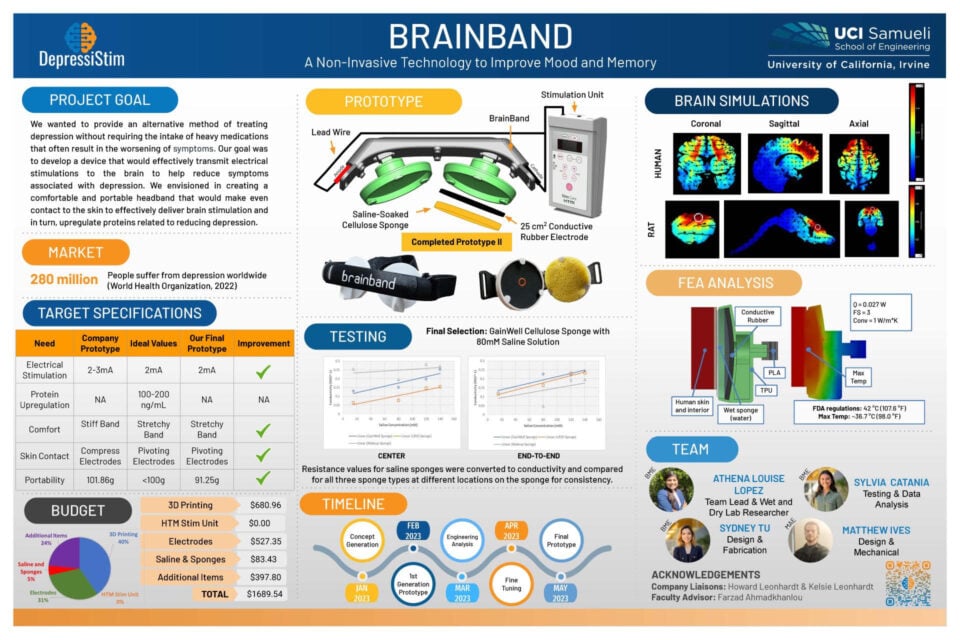
Development of Brain Band™ and its DepressiStim™ programming has also been supported by a University of California, Irvine Master of Engineering Capstone research project focused on advancing the technology, stimulation system and translational development of the platform.
The UCI project provided engineering support for development and optimization of the Brain Band™/DepressiStim™ technology as Lionheart and Leonhardt Ventures advanced the program from laboratory research toward preclinical and clinical evaluation.
Following this engineering-development work, a preclinical animal study was conducted at AccuLab Life Sciences in San Diego, California, led for the Lionheart/Leonhardt research program by neuroscientist Kelsie Leonhardt and Sejal Chaudhari, with the broader development team.
The AccuLab research evaluated the safety, feasibility and biological response to programmable bioelectric brain stimulation and provided a translational foundation for subsequent Brain Band™ development. Lionheart has reported that the preclinical program evaluated regenerative signaling pathways associated with Klotho, BDNF, GDF10 and SDF-1, followed by continued engineering optimization through the UCI Capstone program.
This progression — engineering development at UCI, preclinical research at AccuLab Life Sciences in San Diego, and subsequent human clinical work in Porto Alegre, Brazil — represents an important part of Lionheart Health’s stepwise development of the Brain Band™ platform.
The UCI DepressiStim™ Capstone project is described by the university here:
University of California, Irvine — DepressiStim™ Master of Engineering Project:
UCI DepressiStim™ Capstone Project
Expanding Brain-Regeneration Intellectual Property Portfolio
Brain Band™ is supported by a broader intellectual-property portfolio developed by Howard J. Leonhardt, Kelsie Leonhardt, Leonhardt Ventures and collaborators, with technologies licensed or being developed by Lionheart Health.
The portfolio is designed to move beyond conventional electrical neurostimulation toward programmable bioelectric control of endogenous regenerative signaling.
Among the brain- and healthy-aging-related technologies are:
- BDNF — Brain-Derived Neurotrophic Factor: Bioelectric modulation of BDNF for neuronal survival, neuroplasticity, learning, memory and neurological recovery. A U.S. patent has issued covering modulation of BDNF.
- GDF10: Bioelectric modulation of Growth Differentiation Factor 10, a signaling pathway being investigated for axonal sprouting, neural rewiring and neurological recovery. Lionheart announced USPTO allowance of claims covering GDF10 and BDNF bioelectric modulation in 2026.
- Klotho: Leonhardt intellectual property covers bioelectric modulation of the longevity-associated Klotho protein and its integration with other regenerative signaling pathways. Klotho is a major focus of Lionheart’s brain-health and broader healthspan-development strategy.
- Sirtuins, including SIRT6: Intellectual property covers bioelectric control of longevity-associated Sirtuin signaling. In May 2026, Leonhardt Ventures and Lionheart Health announced a USPTO Notice of Allowance for claims covering bioelectric control of SIRT6 expression.
- Sestrins: Published U.S. patent application US20240285949A1
covers bioelectric modulation of Sestrin expression. The filing also describes combinations with Klotho, Sirtuin and regenerative signaling pathways. - Menin: In June 2026, Leonhardt Ventures announced a new provisional patent application covering bioelectric enhancement and control of Menin expression in the brain, with rights licensed to Lionheart Health for development through Brain Band™. The program is focused particularly on Menin signaling within the hypothalamus and its potential relationship to cognition, inflammation and systemic aging.
- SDF-1/CXCL12 — Stem Cell Homing: Leonhardt’s bioelectric intellectual-property portfolio includes programmable expression of stromal cell-derived factor-1, an important endogenous stem-cell recruitment and homing signal.
- PDGF: Bioelectric expression of platelet-derived growth factor is included within the regenerative portfolio, particularly in combination with SDF-1 and other signaling factors involved in tissue repair, vascular support and regeneration.
- IGF-1: Programmable bioelectric modulation of IGF-1 is incorporated into portions of the regenerative signaling portfolio.
- HMGB1: Lionheart announced a 2026 provisional patent application covering bioelectric modulation of HMGB1for regenerative signaling, stem-cell homing, neuroregeneration and other applications.
- Osteocalcin: A 2026 provisional filing covers targeted bioelectric stimulation designed to increase osteocalcin expression, with potential investigational applications that include cognition, brain performance, metabolic health, muscle function and healthy aging.
- Wnt signaling: A 2026 provisional application covers bioelectric activation and regulation of Wnt signaling pathways for regenerative applications.
- Klotho-Expressing Stem Cells: The portfolio includes technology combining Klotho-expressing regenerative cells with bioelectric stimulation and regenerative delivery approaches.
- Bioelectric-Enhanced Klotho Nanoflowers™: Lionheart announced a U.S. non-provisional patent filing covering a platform combining Klotho-modulating biologics, nanostructured delivery and programmable bioelectric signaling.
Together, these patent families and applications are intended to provide Lionheart with a broad platform for investigating neuroplasticity, neuronal survival, stem-cell recruitment, vascular regeneration, mitochondrial health, inflammation control and healthy brain aging.
CerebraCell™ — More Than 60 Regenerative Signaling Pathways
In July 2026, Lionheart Health announced completion of a broad provisional patent application for its investigational CerebraCell™ Multi-Protein Bioelectric Brain Regeneration Platform.
The filing describes programmable bioelectric control or modulation of more than 60 endogenous regenerative proteins and signaling pathways, integrated with regenerative biologics and other technologies.
The disclosed pathways include Klotho, BDNF, GDF10, GDF11, HMGB1, SDF-1/CXCL12, PDGF, VEGF, eNOS, IGF-1, Apelin, Sestrins, Sirtuins, FOXO3, AMPK, mTOR, Wnt signaling, BMP9, OPG, Sonic Hedgehog, HIF-1α, CXCL5, follistatin, tropoelastin and additional regenerative factors.
The CerebraCell™ provisional application further describes combinations with Klotho-expressing stem cells in nutrient hydrogel, bioelectric-enhanced exosomes and secretomes, Klotho Nanoflowers™, photobiomodulation, rehabilitation technologies and AI-guided imaging and treatment optimization.
This intellectual-property strategy is intended to create a technological foundation extending from the wearable Brain Band™ platform toward increasingly comprehensive approaches to brain health, neurological rehabilitation and regenerative medicine.
From Engineering to Preclinical Research to Human Clinical Evaluation
Lionheart Health’s Brain Band™ development program now brings together several stages of research:
UCI Capstone Engineering Project → AccuLab Life Sciences Preclinical Animal Research → Porto Alegre Brain Band™/DepressiStim™ Human Study → Expanded Brain Band™ Multimodality Development → CerebraCell™ Regenerative Brain Platform
The Porto Alegre Brain Band™ with DepressiStim™ clinical study was conducted by the Dr. Juliana Tramontina Clinic Team in Porto Alegre, Brazil, providing early human clinical experience following the company’s engineering and preclinical development work.
Lionheart believes the combination of human clinical data, preclinical research, university engineering collaboration and an expanding intellectual-property portfolio provides a foundation for larger and more rigorous studies of its brain-health technologies.
“Our objective has been to build Brain Band from the biology outward,” said Howard J. Leonhardt, Founder, Executive Chairman and Co-CEO of Lionheart Health, Inc. “We began by identifying regenerative signaling pathways associated with neural repair and healthy brain aging, developed programmable bioelectric approaches to influence those pathways, progressed through engineering and preclinical work, and then moved into human evaluation. Our expanding patent portfolio — including BDNF, GDF10, Klotho, Sirtuins, Sestrins, Menin, SDF-1, PDGF and multi-protein CerebraCell technologies — is designed to support the continued development of that platform.”
Intellectual Property and Research Notice
References to patents in this release include a combination of issued patents, allowed patent claims, published patent applications, pending applications and provisional patent applications. A provisional patent application does not constitute an issued patent, and the scope of any ultimately issued claims may differ materially from the subject matter described in an initial filing.
Brain Band™, DepressiStim™ and CerebraCell™ technologies and certain biological mechanisms, indications and protocols described in this release remain investigational. Statements regarding modulation or expression of proteins and signaling pathways describe research findings, patent disclosures, development objectives or proposed mechanisms and should not be interpreted as established clinical efficacy for the treatment of neurological or psychiatric disease.
Scientific References Supporting the Lionheart Multi-Modality Brain Health Strategy
1. Klotho — Healthy Brain Aging, Cognition and Neuroplasticity
Klotho is one of the strongest longevity-associated molecular targets in the Lionheart brain-health strategy. Animal and translational studies indicate that increasing circulating Klotho can enhance synaptic plasticity, cognition and memory, although Klotho is not yet an established FDA-approved cognitive therapy.
Key references
Castner SA, et al. “Longevity factor klotho enhances cognition in aged nonhuman primates.” Nature Aging. 2023.
A single low-dose administration of Klotho improved memory in aged rhesus macaques. Importantly, this demonstrated a cognitive effect in a nonhuman primate model rather than only rodents.
Dubal DB, et al. “Life extension factor klotho enhances cognition.” Cell Reports. 2014.
This widely cited work demonstrated that elevated systemic Klotho enhanced cognition and increased synaptic plasticity in mice, providing an important foundation for Klotho as a potential brain-aging target.
Dubal DB, Yokoyama JS, Zhu L, et al. “Life extension factor klotho enhances cognition.” Cell Reports. 2014;7:1065–1076.
The research linked elevated Klotho with improved learning and memory and NMDA-receptor-dependent synaptic function.
Relevance to Lionheart: Supports investigation of bioelectric Klotho elevation, Klotho-expressing regenerative cells and other Klotho-enhancement strategies as components of a brain-health research platform.
2. BDNF — Neuroplasticity, Learning and Memory
Brain-derived neurotrophic factor (BDNF) has extensive scientific support as a regulator of neuronal survival, synaptic plasticity, learning and memory.
Reduced BDNF signaling is associated with aging-related deterioration in neural plasticity, while exercise and other interventions can increase BDNF signaling.
Key references
Park H, Poo MM. “Neurotrophin regulation of neural circuit development and function.” Nature Reviews Neuroscience. 2013;14:7–23.
Foundational review describing BDNF’s role in synaptic plasticity, neuronal development and neural-network function.
Lu B, Nagappan G, Lu Y. “BDNF and synaptic plasticity, cognitive function, and dysfunction.” Handbook of Experimental Pharmacology. 2014.
Describes BDNF as an important molecular regulator of learning, memory and activity-dependent synaptic plasticity.
Erickson KI, et al. “Exercise training increases size of hippocampus and improves memory.” PNAS. 2011;108:3017–3022.
In a randomized human study, aerobic exercise increased hippocampal volume by approximately 2% and was associated with improvements in spatial memory; changes were linked to BDNF.
Coelho FG de M, et al. “Acute aerobic exercise increases brain-derived neurotrophic factor levels in elderly with Alzheimer’s disease.” Journal of Alzheimer’s Disease. 2014.
Reported increased circulating BDNF after aerobic exercise in both Alzheimer’s participants and healthy controls.
Relevance to Lionheart: Provides a strong scientific rationale for investigation of Brain Band™ bioelectric BDNF modulation together with exercise, PBM and other neuroplasticity-supporting modalities.
3. GDF10 — Axonal Sprouting and Neural Repair
GDF10 has compelling preclinical evidence as a molecular signal involved in axonal sprouting following neurological injury.
Key reference
Li S, Nie EH, Yin Y, et al. “GDF10 is a signal for axonal sprouting and functional recovery after stroke.” Nature Neuroscience. 2015;18:1737–1745.
Researchers demonstrated that GDF10 was induced in peri-infarct neurons in mice, nonhuman primates and humans. Experimental GDF10 administration promoted axonal outgrowth and functional recovery after stroke, while suppression of GDF10 impaired sprouting and recovery.
Mechanistically, the investigators identified effects involving TGF-β signaling, PTEN downregulation, PI3K signaling and axonal-guidance pathways.
Relevance to Lionheart: Strong biological rationale for investigating programmable GDF10 modulation as a neuroregenerative signaling target, particularly for neural repair. This remains primarily preclinical/translational rather than an established human brain therapy.
4. Menin — Hypothalamic Aging and Cognitive Decline
Menin is an especially interesting emerging target because recent research links hypothalamic Menin signaling with both systemic aging and cognition.
Key reference
Leng L, Yuan Z, Su X, et al. “Hypothalamic Menin regulates systemic aging and cognitive decline.” PLOS Biology. 2023;21.
The researchers found that hypothalamic Menin declined with age in mice. Restoring Menin expression in the ventromedial hypothalamus of aged animals improved learning and memory, reduced aging-associated biomarkers and extended lifespan. Conversely, reducing Menin signaling accelerated age-associated decline.
The researchers implicated neuroinflammation, metabolic regulation and D-serine signaling between the hypothalamus and hippocampus as potential mechanisms.
Relevance to Lionheart: Provides a biological rationale for the company’s investigation of Menin modulation as an emerging brain-aging target. At present, this evidence is preclinical and should not be characterized as proof of a human Menin therapy.
5. Wnt Signaling — Neural Stem Cells and Regenerative Remodeling
Wnt signaling is an important addition to the Lionheart brain-regeneration strategy.
Wnt pathways participate in neural development, adult neurogenesis, stem-cell regulation, cellular differentiation and tissue remodeling. Appropriate Wnt signaling is therefore being investigated as part of regenerative strategies aimed at creating an environment supportive of neural repair.
In May 2026, Leonhardt Ventures announced a provisional patent application, exclusively licensed to Lionheart Health, covering bioelectric activation and control of Wnt signaling using technologies that may include frequency-specific electrical stimulation, microcurrents, PEMF, wearable and implantable electroceutical systems and AI-guided signaling control.
Wnt was subsequently incorporated into Lionheart’s CerebraCell™ brain-regeneration platform, where the investigational objective is to regulate neural stem-cell proliferation, differentiation and reconstruction of damaged neural circuitry.
6. FOXO3 — Cellular Stress Resistance and Healthy Aging
FOXO3 is strongly associated with cellular stress responses and longevity biology and participates in regulation of autophagy, oxidative-stress resistance, metabolism, mitochondrial homeostasis and stem-cell maintenance.
Leonhardt Ventures announced a 2026 provisional patent application covering programmable bioelectric modulation of the interconnected:
FOXO3 → AMPK → mTOR
signaling network.
The technology has been licensed to Lionheart Health and is intended for investigation across longevity, regeneration, metabolic optimization, cognitive performance and other healthspan applications.
7. AMPK — Cellular Energy and Mitochondrial Regulation
AMPK acts as an important cellular energy sensor.
Within the CerebraCell™ strategy, Lionheart describes AMPK modulation as intended to support cellular-energy balance while promoting mitochondrial biogenesis and repair.
This creates a potentially important bridge between brain energy metabolism and regenerative signaling.
8. mTOR — Protein Synthesis, Autophagy and Regenerative Remodeling
mTOR is a central regulator of cell growth, protein synthesis and nutrient sensing.
Rather than proposing simple continuous suppression or activation of mTOR, Lionheart’s intellectual-property strategy describes dynamic regulation of the FOXO3–AMPK–mTOR network.
This distinction is important because appropriate temporal balance among growth, repair and autophagy may be more biologically relevant than treating any one pathway as an isolated on/off switch.
Supporting Modalities in the Multi-Modality Protocol
5. Non-Invasive Electrical Brain Stimulation
There is a substantial human literature on transcranial electrical stimulation, including tDCS and tACS, demonstrating the ability of weak electrical currents to influence cortical excitability and certain aspects of cognition.
Xu Y, Qiu Z, Zhu J, et al. “The modulation effect of non-invasive brain stimulation on cognitive function in patients with mild cognitive impairment: a systematic review and meta-analysis of randomized controlled trials.” BMC Neuroscience. 2019;20:2.
Eleven randomized controlled trials involving 367 participants were analyzed. Non-invasive brain stimulation produced statistically significant improvements in global cognition and verbal fluency, although the authors emphasized limitations in the evidence.
A larger 2025 systematic review and meta-analysis of 80 randomized studies involving 3,177 participants also found cognitive benefits from several forms of non-invasive brain stimulation, with effects varying by stimulation technology and parameters.
Brunoni AR, et al. “A systematic review on reporting and assessment of adverse effects associated with transcranial direct current stimulation.” International Journal of Neuropsychopharmacology. 2011.
Frequently cited reference regarding the safety and clinical development of low-intensity transcranial electrical stimulation.
Relevance: Supports the general principle that controlled electrical stimulation can modulate brain activity and cognitive function, while it does not independently validate any proprietary Brain Band™ waveform.
6. Electroacupuncture
Electroacupuncture combines acupuncture-point stimulation with low-level electrical currents and has been investigated for neurological and cognitive effects.
Rodrigues JM, et al. “Electro-Acupuncture Effects Measured by Functional Magnetic Resonance Imaging: A Systematic Review.” 2023.
The systematic review examined functional neuroimaging studies and reported evidence that electroacupuncture can modulate activity across neurological networks, while noting substantial heterogeneity among protocols and conditions.
Preclinical and clinical studies have also investigated electroacupuncture in cognitive impairment and neurological rehabilitation, with proposed mechanisms involving BDNF, neuroplasticity, inflammation and cerebral blood flow.
Relevance: Supports including electroacupuncture as an adjunct research modality, but evidence varies substantially by indication and stimulation protocol.
7. Gut-Brain Health and Microbiome Support
The microbiota-gut-brain axis is now an established area of neuroscience research. Gut microorganisms can influence the nervous system through immune, metabolic, endocrine and neural pathways.
Mou Y, Du Y, Zhou L, et al. “Gut microbiota interact with the brain through systemic chronic inflammation: implications on neuroinflammation, neurodegeneration, and aging.” Frontiers in Immunology. 2022.
Reviews evidence connecting intestinal microbiota, systemic inflammation and neurological function.
Ticinesi A, et al. “Gut microbiota, cognitive frailty and dementia in older individuals: a systematic review.” Clinical Interventions in Aging. 2018.
Reviewed associations between microbiome alterations, cognitive frailty and dementia in older populations.
More recent systematic reviews of microbiota-targeted interventions suggest possible cognitive effects but emphasize that clinical evidence remains heterogeneous.
Relevance: Supports incorporating diet, fiber, metabolic health and individualized gut-health interventions into a broad brain-health program rather than assuming that probiotics or microbiome manipulation directly treat cognitive disease.
8. Photobiomodulation
Transcranial photobiomodulation uses red or near-infrared light and is being investigated for effects involving mitochondrial function, cerebral metabolism, blood flow, inflammation and neuronal function.
Rodríguez-Fernández L, et al. “Photobiomodulation in the aging brain: a systematic review.” 2024.
The systematic review concluded that photobiomodulation shows promise as a non-invasive strategy for cognitive and brain-health applications while stressing the need for larger, standardized clinical trials.
Clinical research has also evaluated transcranial PBM in neurological populations, including randomized controlled studies.
Relevance: Supports PBM as an investigational complementary modality within a multimodality brain-health protocol.
9. PEMF — Pulsed Electromagnetic Field Therapy
PEMF research suggests that electromagnetic-field exposure can affect neuronal signaling, neuroplasticity, cerebral metabolism and inflammation, although the brain-health evidence is considerably less mature than that for exercise or established forms of non-invasive brain stimulation.
Li Y, et al. “Effects of pulsed electromagnetic fields on learning and memory…” 2019.
In an experimental dementia model, pulsed electromagnetic-field exposure improved learning and memory performance.
Evidence level: Promising preclinical evidence, with substantially less robust human cognition evidence than tDCS, exercise or Mediterranean dietary interventions.
Relevance: Best presented as an investigational adjunct rather than a proven cognitive therapy.
10. EMS-Enhanced Exercise / BodStim™ Rationale
Exercise has one of the strongest overall evidence bases among non-pharmacological brain-health interventions.
Physical exercise is associated with improvements in cognition, cardiovascular health, metabolic function, neurotrophic signaling and hippocampal structure.
Erickson KI, et al. PNAS. 2011.
A randomized human trial demonstrated that aerobic training increased hippocampal volume approximately 2%, alongside memory improvements.
Behrad S, et al. “The effect of physical exercise on circulating neurotrophic factors in healthy older adults: systematic review and meta-analysis.” 2024.
Evaluated exercise-related changes in circulating neurotrophic biomarkers, including BDNF, in older adults.
Akalp K, et al. “The effects of different types of exercises on cognition…” 2024.
Systematic review/meta-analysis evaluating cognitive outcomes and neuroprotective and inflammatory biomarkers across exercise modalities.
Important distinction: These studies strongly support exercise, but they should not automatically be presented as proof that EMS produces identical neurological benefits. The scientific proposition behind BodStim™ is that EMS-enhanced muscle activation may amplify or facilitate exercise-related physiological signaling, which requires product-specific validation.
11. Healthy Diet — Mediterranean-Style Nutrition
A Mediterranean dietary pattern has some of the strongest randomized clinical evidence connecting nutrition with preservation of cognitive function.
Valls-Pedret C, Sala-Vila A, Serra-Mir M, et al. “Mediterranean Diet and Age-Related Cognitive Decline: A Randomized Clinical Trial.” JAMA Internal Medicine. 2015;175:1094–1103.
In 447 older adults at elevated cardiovascular risk, Mediterranean diets supplemented with either extra-virgin olive oil or nuts were associated with better cognitive outcomes compared with the control diet.
Martínez-Lapiscina EH, et al. “Mediterranean diet improves cognition: the PREDIMED-NAVARRA randomized trial.” Journal of Neurology, Neurosurgery & Psychiatry. 2013;84:1318–1325.
Participants assigned to Mediterranean diets supplemented with olive oil or nuts demonstrated higher cognitive scores than controls.
Relevance: Strong support for a Mediterranean-style, plant-rich, cardiometabolic-health-oriented dietary pattern within a brain-health protocol.
12. Supplements
Supplement evidence must be presented more carefully because benefits differ greatly by nutrient, baseline deficiency and patient population.
Vitamin D
A 2024 systematic review and meta-analysis encompassing 24 randomized trials and 7,557 participants found a small positive overall effect of vitamin D supplementation on global cognition, with larger effects in populations with baseline vitamin-D deficiency.
This supports testing and correcting deficiency, rather than indiscriminate high-dose supplementation.
Omega-3 Fatty Acids
Evidence is mixed.
Some studies suggest potential cognitive benefits in selected populations, but a Cochrane review concluded that long-chain omega-3 supplementation does not convincingly prevent cognitive decline in cognitively healthy older adults.
Other clinical studies have reported benefits in specific cardiovascular or nutritional populations.
Thus, omega-3 supplementation should be described as individualized nutritional support, not a proven treatment for cognitive decline.
Broader Supplement Strategy
For the Lionheart protocol, the strongest scientifically defensible approach is:
Measure deficiencies and metabolic status → correct documented deficiencies → use evidence-based nutrition first → personalize supplementation according to the individual’s clinical profile.
This avoids suggesting that any generic supplement stack has been demonstrated to regenerate the brain.
Scientific Rationale for the Combined Protocol
The scientific foundation can therefore be summarized as four complementary layers:
Regenerative signaling targets:
Klotho + BDNF + GDF10 + Menin
Direct neuromodulation:
Brain Band™ bioelectric stimulation + electrical stimulation + electroacupuncture + PBM + PEMF
Muscle-to-brain signaling:
BodStim™/EMS-enhanced exercise + conventional exercise
Systemic biological environment:
Mediterranean-style diet + gut-health optimization + individualized supplementation + metabolic and inflammatory management
The published literature provides substantial evidence for the individual biological mechanisms and several of the component interventions, but it does not yet establish that the entire combined Lionheart multimodality protocol produces additive or synergistic clinical benefits. That specific proposition should be tested prospectively in Lionheart clinical studies.
Clinical and Regulatory Notice
Brain Band™ and certain DepressiStim™ protocols, indications and proposed mechanisms described above are investigational and may require use within appropriately authorized clinical research protocols. Reported results reflect particular study populations and endpoints and should not be interpreted as guarantees of individual outcomes. Lionheart Health does not claim that Brain Band™ or DepressiStim™ has been FDA-cleared or approved to diagnose, treat, prevent or cure depression, dementia, Alzheimer’s disease or other neurological or psychiatric diseases unless specifically supported by the applicable regulatory authorization.
Howard J. Leonhardt
Executive Chairman & CEO
Lionheart Health, Inc.
Leonhardt Ventures LLC
4440 Von Karman, Ste 100
Newport Beach, CA 92660
http://www.leonhardtventures.com
http://www.lionhearthealthstim.com
http://www.lionheartlongevity.com