
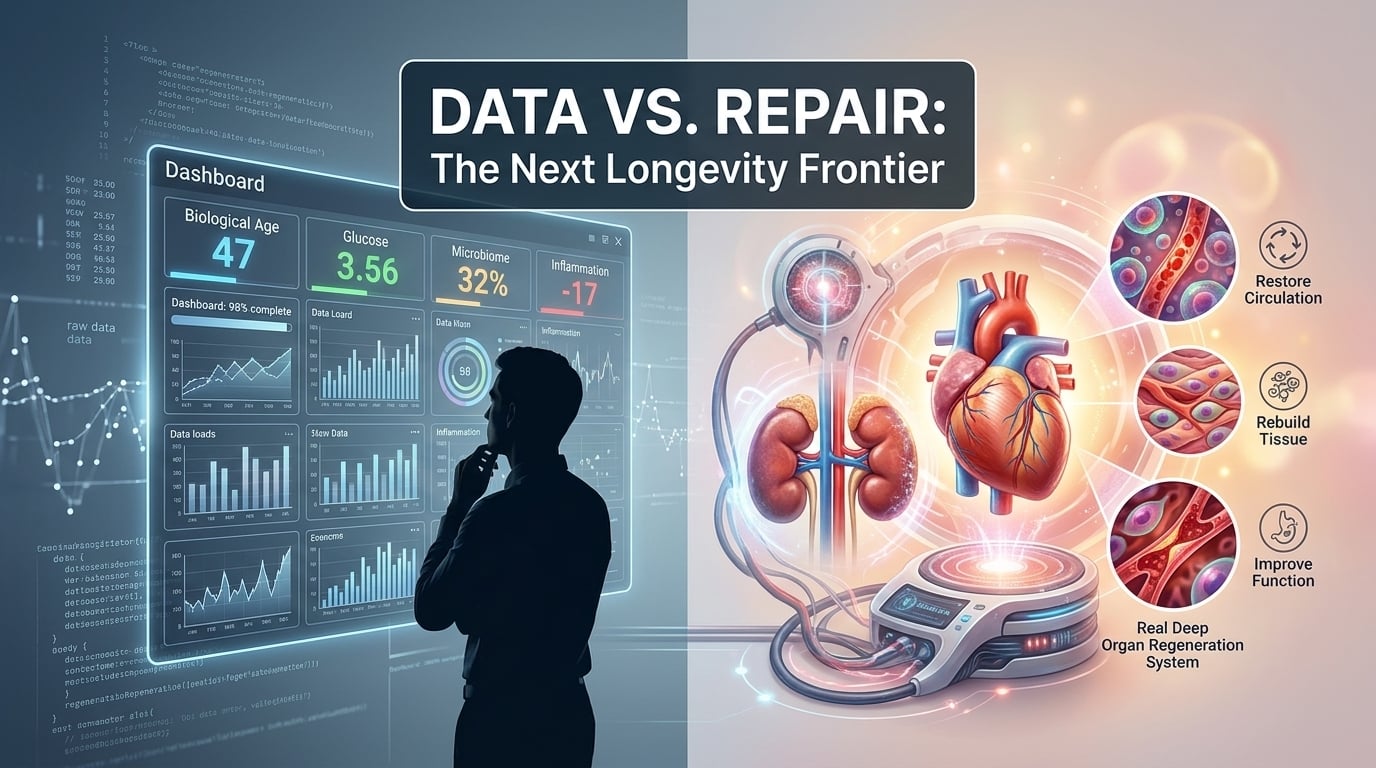
The longevity industry has become obsessed with measurement.
We measure biological age, glucose, sleep, heart-rate variability, inflammation, hormones, microbiomes, body composition and hundreds of biomarkers. We build dashboards that tell people—in extraordinary detail—how quickly their bodies may be declining.
But measuring deterioration is not the same as reversing it.
A dashboard can tell us that an organ is failing. It cannot repair that organ.
A wearable can identify poor circulation. It cannot regenerate damaged blood vessels.
A blood test can reveal declining kidney, liver, brain or cardiovascular function. It cannot restore the lost cells and tissues responsible for that decline.
More data may improve awareness, risk prediction and clinical decision-making. But data alone will not deliver a major extension of healthy human life.
The Next Longevity Revolution Must Be Therapeutic
The central challenge of aging is not a shortage of information. It is the progressive loss of biological function.
Muscles weaken. Blood vessels stiffen. Mitochondria lose efficiency. Stem-cell activity declines. Inflammation becomes chronic. Neural networks deteriorate. Organs accumulate damage faster than the body can repair it.
If we want to extend healthspan meaningfully, we must move beyond observing these processes and begin actively reversing them.
The future belongs to technologies capable of:
- Regenerating damaged tissue
- Restoring circulation
- Rebuilding muscle
- Improving mitochondrial function
- Modulating chronic inflammation
- Repairing neural pathways
- Rejuvenating exhausted stem-cell populations
- Replacing lost cells
- Reactivating the body’s own repair proteins
- Preserving or restoring organ function
These are not simply wellness services. They are true therapeutics.
Technology Must Repair Organs, Not Merely Read Them
Diagnostics remain essential. We need accurate measurements to identify disease, select treatments and determine whether a therapy is working.
But the sensor should support the therapeutic—not become a substitute for it.
The most important longevity technologies will not be devices that merely sit on the wrist and collect more data. They will be systems that interact directly with damaged biology.
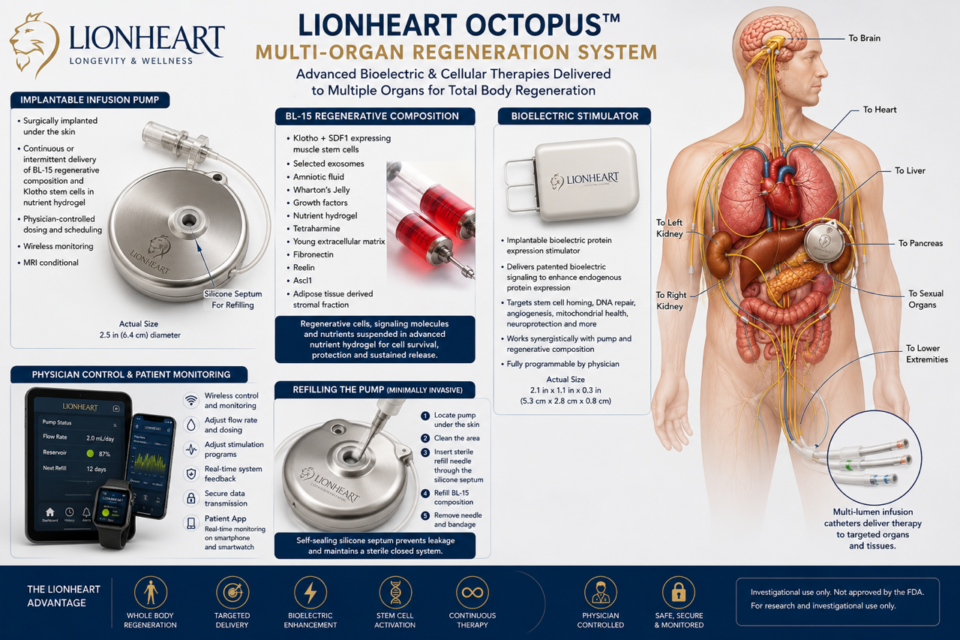
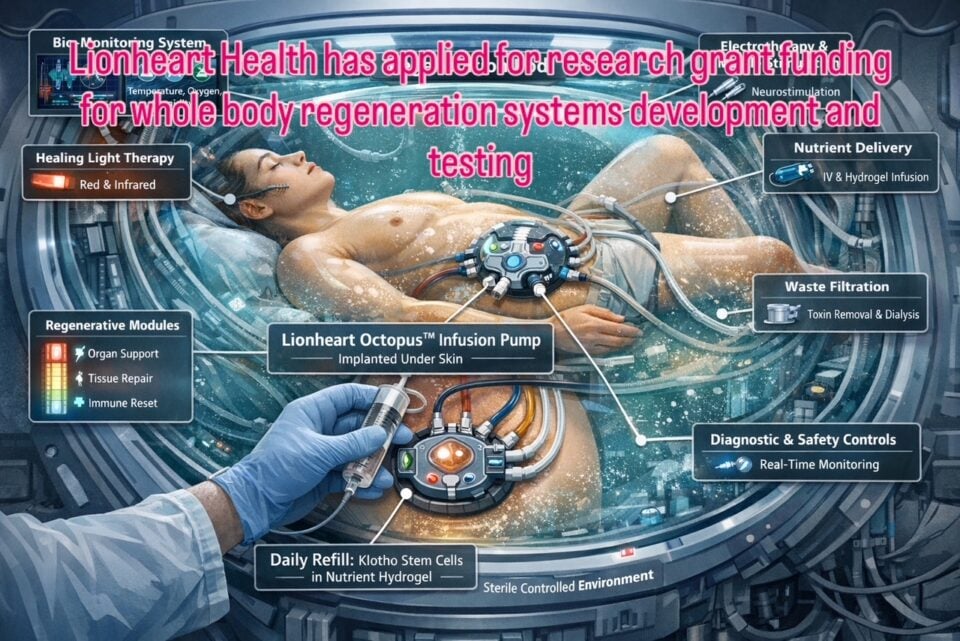
These may include implantable bioelectric stimulators, regenerative matrices, cell-based implants, localized gene therapies, tissue-engineered grafts, refillable therapeutic reservoirs and closed-loop systems that sense deterioration and automatically deliver a corrective signal or treatment.
The breakthrough will occur when monitoring and repair are combined:
- Detect declining organ function.
- Identify the biological pathway responsible.
- Deliver a precise electrical, cellular, genetic or biochemical intervention.
- Measure the organ’s response.
- Adjust the therapy continuously.
- Restore durable function.
That is a genuine longevity platform—not simply another health dashboard.
Longevity Will Be Won Deep Inside the Body
The most consequential healthspan advances will likely take place deep inside the body, where aging actually damages tissues and organs.
Aging is not merely visible in the skin. It affects the heart, kidneys, liver, brain, lungs, pancreas, muscles, blood vessels and immune system. Addressing these changes requires therapies capable of reaching the affected organ and altering its biology.
The next generation of longevity medicine may therefore be built around precisely placed organ implants and regenerative systems that provide sustained treatment at the site of injury.
Imagine:
- A cardiac implant that stimulates regenerative protein expression while supporting new blood-vessel growth
- A kidney-adjacent system designed to improve circulation, reduce inflammation and protect remaining function
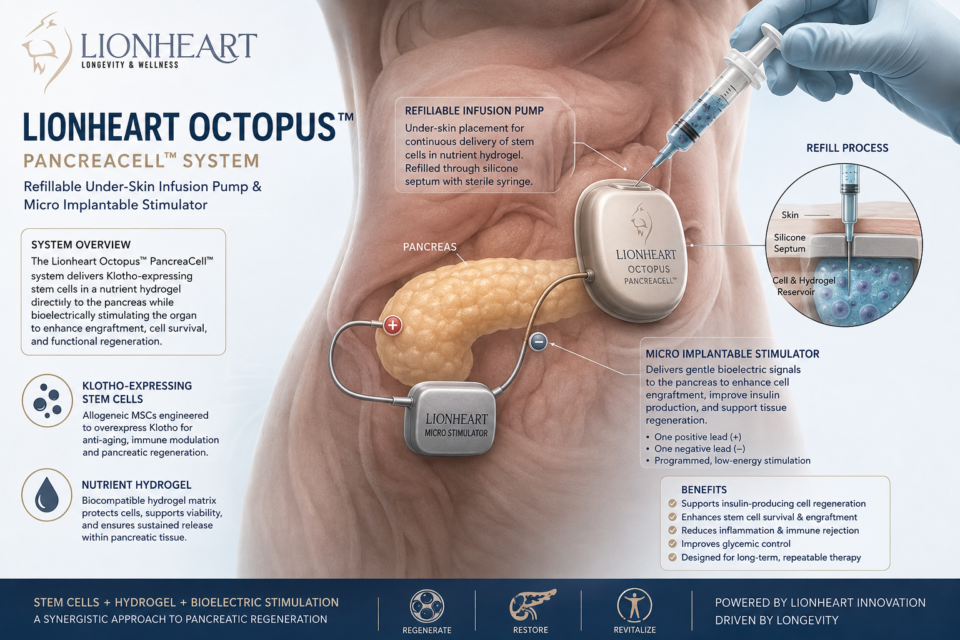
- A pancreatic implant combining stimulation with regenerative cells and controlled therapeutic delivery
- A neurostimulation platform that promotes blood flow, neuroplasticity and protective protein expression
- A muscle-regeneration implant that counters frailty and age-related muscle loss
- A vascular implant that monitors circulation while activating repair pathways when deterioration is detected
Such systems could operate for months or years, adapting treatment to the patient’s condition rather than providing a brief intervention followed by passive observation.
Hospitals—not Retail Strip Malls—Will Lead the Hardest Part
Retail longevity clinics can play a useful role. They can improve nutrition, exercise, sleep, prevention, metabolic health and early detection. They may also help patients follow evidence-based programs that reduce avoidable health risks.
But the deepest gains in human healthspan will not come from IV menus, supplement subscriptions or increasingly elaborate laboratory panels.
They will come from serious medical therapeutics developed through rigorous research and delivered by multidisciplinary teams.
Deep organ implants, regenerative cell therapies, tissue engineering, gene therapies and advanced bioelectric systems require hospital-level infrastructure. They require imaging, sterile procedure rooms, trained specialists, regulatory oversight, long-term monitoring and coordinated follow-up.
The future longevity center may therefore look less like an upscale spa and more like a cardiovascular, neurological or transplant institute—supported by specialists in regenerative medicine, biomedical engineering, electrophysiology, surgery, imaging and molecular biology.
This is where the most powerful interventions can be delivered safely and evaluated properly.
From “Know More” to “Repair More”
The industry’s central question must change.
Instead of asking:
“How much more can we measure?”
We should ask:
“What can we repair?”
Instead of celebrating another biological-age score, we should demand evidence that a therapy restores function.
Can it improve cardiac output?
Can it rebuild muscle and prevent frailty?
Can it preserve kidney filtration?
Can it regenerate damaged nerves?
Can it improve blood flow?
Can it restore mitochondrial performance?
Can it reduce biological age by repairing the tissues that determine it?
The standard should be measurable functional recovery—not simply the production of more measurements.
A New Definition of Longevity Medicine
True longevity medicine will bring together four capabilities:
Detection: Identify early functional decline before irreversible organ failure occurs.
Interpretation: Determine the molecular, cellular and physiological causes of that decline.
Intervention: Deliver a targeted therapy capable of repairing or regenerating damaged tissue.
Verification: Demonstrate durable improvements in organ function, physical performance and quality of life.
Data remains part of this system, but it is no longer the final product. Its purpose is to guide and verify treatment.
The winning longevity companies will not be those that generate the largest dashboards. They will be the companies that use data to deliver the most effective repairs.
The Real Healthspan Finish Line
The goal of longevity should not be to help people watch themselves age with greater precision.
It should be to prevent, slow and ultimately reverse the functional deterioration that makes aging so devastating.
That requires a transition from wellness monitoring to regenerative therapeutics—from observation to intervention and from superficial optimization to deep organ repair.
The next great healthspan breakthrough will not be another ring, watch, scan or laboratory report.
It will be a therapeutic system that reaches damaged tissue, activates repair and restores function.
More data can tell us where aging is happening.
Only true therapeutics can do something about it.
By Howard J. Leonhardt