
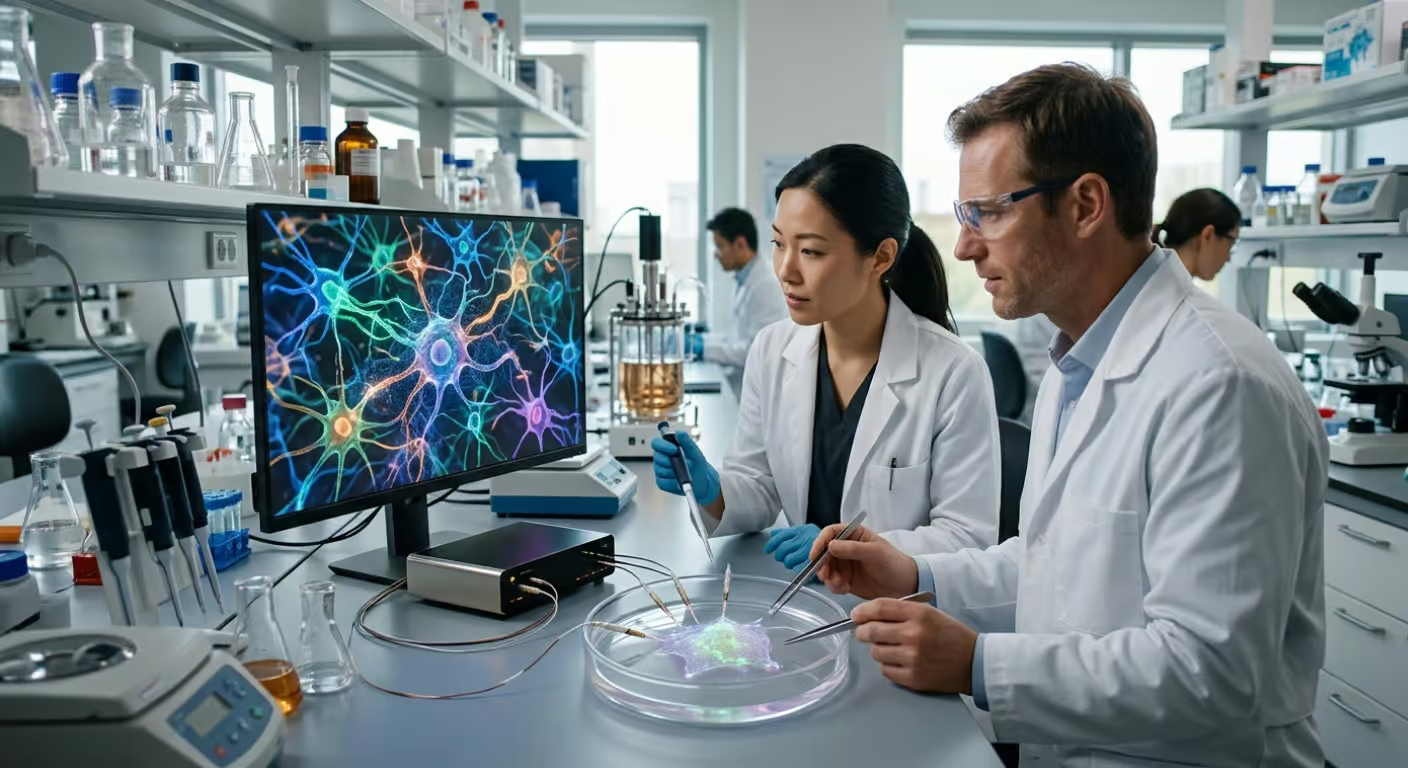
Why Lionheart Health is Exploring More Than 60 Bioelectric Protein Expression Pathways
Every few months a new scientific breakthrough captures headlines.
Recently, researchers reported exciting progress toward stimulating limb regeneration by activating two important growth factors—FGF2 and BMP2—that helped encourage regenerative healing in preclinical animal studies. Rather than simply producing scar tissue, the treated tissue began activating developmental programs associated with regeneration. While this research is still in the experimental stage, it represents another important step toward understanding how the body can be encouraged to rebuild itself.
At Lionheart Health, we believe this growing body of research points toward an important principle:
True regeneration is unlikely to depend upon a single protein or one “magic bullet.”
Instead, regeneration appears to require the coordinated activation of dozens of biological signaling pathways working together in the right place, at the right intensity, and at the right time.
Bioelectric Control of Regenerative Biology
One of the most exciting discoveries in regenerative medicine over the past decade is that cells communicate not only through chemistry but also through electrical signals.
Bioelectric signaling helps regulate gene expression, stem cell behavior, tissue organization, blood vessel formation, nerve repair, and extracellular matrix remodeling.
Lionheart Health’s research programs are focused on using precisely programmed bioelectric stimulation protocols to encourage expression of numerous proteins involved in healthy tissue repair and regeneration.
These include pathways associated with:
- FGF2 – supports angiogenesis, stem cell activation, and tissue repair
- BMP2 – promotes bone formation and regenerative remodeling
- Klotho – associated with healthy aging, vascular health, and regenerative capacity
- Sestrins – cellular stress resistance and metabolic resilience
- Sirtuins – longevity-associated cellular regulation
- Nanog – maintenance of stem cell characteristics
- GDF10 – neuroregeneration and tissue remodeling
- BDNF – brain-derived neurotrophic factor supporting cognition and nerve health
- Apelin – vascular repair, muscle function, and healthy aging
- COL17A1 – epidermal stem cell maintenance
- eNOS – nitric oxide production and improved microcirculation
- HIF-1α – oxygen sensing and regenerative signaling
- VEGF – formation of new blood vessels
- Collagen I
- Collagen III
- Menin
…along with dozens of additional proteins involved in stem cell recruitment, extracellular matrix remodeling, immune regulation, angiogenesis, neuroplasticity, and healthy aging.
Regeneration Is an Orchestra
Imagine trying to perform a symphony using only one instrument.
That is similar to expecting one growth factor alone to regenerate an entire organ.
Successful regeneration requires coordinated communication among:
- Stem cells
- Blood vessels
- Immune cells
- Nerves
- Extracellular matrix
- Mechanical forces
- Electrical signaling
- Growth factors
- Gene expression networks
Modern regenerative biology increasingly supports this systems-based view.
The newest FGF2/BMP2 findings fit neatly into this broader understanding.
From Repair Toward Regeneration
Traditional medicine has often focused on replacing damaged tissue or slowing disease progression.
Regenerative medicine seeks something different:
Helping the body rebuild itself.
Scientists studying salamanders, axolotls, zebrafish, deer antlers, and mammalian tissue regeneration continue discovering conserved developmental pathways that appear to remain present—but largely inactive—in adult humans.
The exciting question is no longer:
“Do humans possess regenerative programs?”
Increasingly it is becoming:
“How can we safely reactivate them?”
Lionheart Health’s Multi-Pathway Strategy
Rather than targeting one isolated pathway, Lionheart Health is investigating bioelectric stimulation strategies designed to influence a broad network of regenerative signaling proteins simultaneously.
Our research programs are exploring how programmable electrical stimulation may help support pathways involved in:
- Healthy aging
- Brain health
- Cardiovascular function
- Hair regeneration
- Skin rejuvenation
- Musculoskeletal repair
- Vision health
- Tissue regeneration
- Stem cell activity
- Vascular remodeling
The goal is to better understand whether coordinated bioelectric signaling can complement the body’s own regenerative biology.
Looking Ahead
The recent reports highlighting FGF2 and BMP2 are encouraging additions to an expanding field of regenerative science.
Each new discovery reinforces an important idea:
The future of regenerative medicine is likely to involve coordinated biological networks rather than isolated molecules.
As our understanding of bioelectric signaling continues to grow, researchers are gaining new tools for studying how multiple regenerative pathways interact during healing.
While much work remains before these approaches become standard clinical practice, the progress being made across universities, research institutes, and biotechnology companies suggests that regenerative medicine is entering an exciting new era.
At Lionheart Health, we remain committed to advancing research into programmable bioelectric therapies that explore the coordinated expression of more than 60 regenerative proteins and signaling pathways in support of healthy aging and tissue repair.
Research discussed above remains investigational. Lionheart Health technologies are under continuing development, and many applications described are being studied for research purposes. More clinical research will be required to establish safety and effectiveness for specific medical indications.