Portfolio venture
B aliveLogo

B-Alive

B-Alive is a biotechnology venture dedicated to regaining continence and confidence for women. We address the underlying causes of bladder dysfunction and overactive bladders through patented bioelectric signaling and regenerative biologics, targeting a global market projected to reach $24.1 billion.

/ – THE COMPANY

About this Venture

Discover our background, mission, and the world-class research driving our next-generation medical technology.

Our Mission & Story

Our Mission: To aid women suffering from the emotional and physical restrictions of incontinence and an overactive bladder. We are dedicated to the solution to improve and restore the quality of life by regenerating bladder muscles, nerves, and improving elasticity for better functionality. We strive to have our patients thrive.

Our Story: We are B-Alive, an organization built around a biotechnology solution for women. Pregnancy, childbirth, and menopause contribute to the degeneration of muscles and miscommunication of nerves from brain to bladder. Research reveals a growing market of adult diapers with women outbuying men 3 to 1 and a future market size of $24.1 billion worldwide.

Product Tier Strategy

B-Alive is developing four products matched with severity for bladder function recovery:

  • B-Alive Bioelectric: Non-invasive bioelectric stimulation.
  • B-Alive Biologics Lite: Bioelectric stimulation combined with a simple 3-component biologics composition.
  • B-Alive Biologics Full: Bioelectric stimulation combined with a 15-component full complex bladder regeneration composition.
  • B-Alive PelvicStim: Non-invasive bioelectric pelvic floor stimulation designed to regenerate muscle and nerves and strengthen muscle.
  • Combination Therapy: For most patients we will combine the B-Alive PelvicStim for strengthening pelvic muscle function with the right matched bladder and urethral sphincter regeneration product based on severity.

Clinical Leadership & Manufacturing

Founded by Women to Support Women: B-Alive is the first to address the underlying causes of bladder dysfunction. Our team seeks to fully regenerate pelvic muscles, bladder, and urethral sphincters, thus restoring full normal functionality.

  • Clinical Success: Completed a 30-patient clinical study for our non-invasive bioelectric stimulation product.
  • Manufacturing: Our benchtop stimulator was manufactured in Anaheim, California, in a cGMP and ISO 9001 certified facility.
  • Incubation: Supported by Leonhardt’s Launchpads in California, Utah, Pittsburgh, Minnesota, Australia, and Brazil.

Regulatory Roadmap & Status

  • FDA Clearance: Our stimulator already has FDA 510K market clearance for muscle function recovery, improved blood circulation, and pain relief.
  • Indications Expansion: We are preparing new clinical data to request the FDA to broaden the labeling of indications of use.
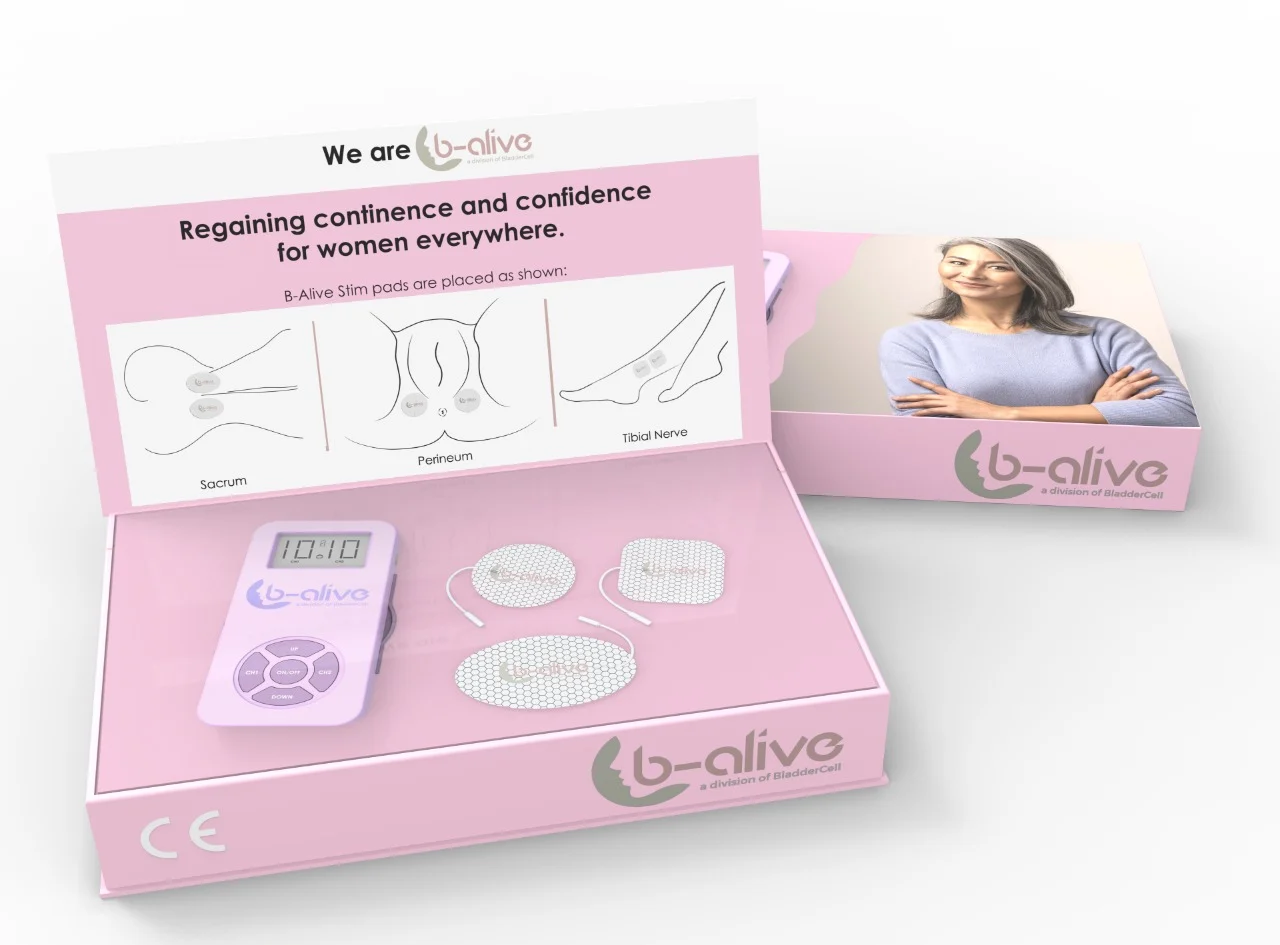
  • Innovation: An at-home portable stimulator is in development with 510K clearance expected in the near future.

/ A - Our Team

Our Team

  • Kelsie

    Kelsie Leonhardt

    Kelsie Leonhardt is a biotechnology research scientist and serial entrepreneur specializing in research of the human nervous system. Kelsie received...

    View details
  • Laurelle

    Laurelle F. Johnson

    Laurelle F. Johnson initiated the idea of focusing on research for bladder issues at Leonhardt Ventures. Laurelle has a long...

    View details
  • Cristiane

    Cristiane Carboni

    Cristiane Carboni is a pelvic floor physiotherapist with a Master Degree in pelvic floor Rehabilitation and Rehabilitation Sciences. She is...

    View details
  • Abby

    Abby Seiger

    Abby Seiger is our lab technician who works behind the scenes to carry out wet-lab and animal experiments. She is...

    View details
/ – THE TECHNOLOGY

The Technology behind it

Discover the science and innovation driving our advanced solutions, designed to deliver safe, effective, and transformative results.

The Technology Platform (Bioelectric Signaling)

Our technology platform is based first on patented precise bioelectric signaling sequences for controlling the release of specific proteins for specific purposes.

Scientific Insight: The bladder can regenerate like nobody’s business and now we know why—through precise signaling.

Protein Expression Sequences:
  • Muscle Regeneration (Myogenesis): Klotho, follistatin, COL17A1, SDF, PDGF.
  • Elasticity Improvement: Tropoelastin.
  • Nerve Regeneration: Sonic hedgehog, IGF1, LIM protein.
  • Blood Flow Improvement (Angiogenesis): VEGF, HIF1a, SDF1, PDGF, eNOS.

B alive

The BC-15 Bladder Regeneration Composition

Our proprietary BC-15 bladder, muscle, and urethral regeneration composition is designed for organs to be fully recovered.

The Complete Composition Components:

  1. Stem cells (hypoxia treated – MSCs, adipose derived, iPS)
  2. Myoblasts
  3. Exosomes
  4. Stromal fraction
  5. PRF (Platelet-Rich Fibrin)
  6. Amniotic fluid
  7. Oxygenated nanoparticles
  8. Bladder matrix
  9. Nutrient hydrogel
  10. Selected growth factors
  11. Klotho
  12. Follistatin
  13. LIM protein
  14. Tropoelastin
  15. Micro RNA gel, selected alkaloids, and Wharton’s Jelly.

Balivewoman

Mechanism of Action & Delivery

  • Integrated Therapy: For most patients, we will combine the B-Alive PelvicStim for strengthening pelvic muscle function with the right matched bladder and urethral sphincter regeneration product based on severity.
  • Full Restoration: Our team seeks to fully regenerate pelvic muscles, bladder, and urethral sphincters, thus restoring full normal functionality.
  • Delivery System: The composition is delivered daily to the organ via a re-fillable micro infusion pump and a pacing infusion catheter via slow positive pressure infusion until the organs are fully recovered.

Drpatient

Founded by Women to Support Women

B-Alive is the first to address the underlying causes of bladder dysfunction.

  • Clinical Success: The team has completed a 30-patient clinical study for our non-invasive bioelectric stimulation product.
  • Quality & Safety: The B-Alive benchtop stimulator was manufactured in Anaheim, California, in a cGMP and ISO 9001 certified facility.
  • Product Innovation: We have also developed an at-home use portable stimulator that expects to have FDA 510K market clearance in the near future.
  • Global Incubation: B-Alive and BladderCell are incubating with support from Leonhardt’s Launchpads Innovation and Startup Launch Accelerators in California, Utah, Pittsburgh, Minnesota, Australia, and Brazil.

Womansitting2
/ – KNOWLEDGE BASE

Related resources

Want to learn more? Browse our clinical resources and scientific publications on our comprehensive suite of targeted treatments.

Bladder & Muscle Regeneration Core

Comprehensive scientific data focused on restoring bladder tissue and skeletal muscle functions through advanced regenerative medicine.

Bladder Tissue Potential

Comprehensive research detailing the extraordinary natural regenerative capabilities of the bladder wall and its biological tissue repair mechanisms.

View details
Follistatin Healing Effects

A technical study analyzing how Follistatin interacts with skeletal muscle to significantly accelerate healing and reduce fibrosis after injury.

View details
Muscle Recovery Therapy

Investigating the use of Follistatin as a breakthrough therapeutic agent to improve muscle mass and functional recovery in patients.

View details
Klotho Protein Function

Evidence-based analysis identifying the longevity protein Klotho as a mandatory biological requirement for maintaining healthy muscle stem cell function.

View details
Age-Reversing Proteins

Detailed research showing how specific longevity proteins can rejuvenate muscle healing processes, effectively reversing age-related declines in tissue repair.

View details
Stem Cell Migration

An examination of the critical role played by SDF-1 signaling pathways in guiding stem cell migration to sites of muscle damage.

View details
Bioengineered Bladder Walls

Strategic engineering approaches for creating functional bladder tissue structures using advanced cell-matrix scaffolds for clinical repair and reconstruction.

View details
Matrix Engineering Apps

Scientific data on using acellular matrix platforms for clinical bladder tissue engineering, focusing on patient-specific regenerative medicine outcomes.

View details
Urothelium Growth Data

Investigating the regeneration of bladder urothelium within acellular tissue matrices to support better patient outcomes in complex urological procedures.

View details
Exosome Muscle Repair

Research on how exosomes derived from urine stem cells improve stress urinary incontinence by promoting rapid muscle repair and tissue remodeling.

View details
Painful Bladder Therapy

Clinical assessment of PRF efficacy in managing chronic painful bladder syndrome symptoms through regenerative growth factor delivery.

View details
Stem Cell Horizons

Reviewing future clinical directions for stem cell-based bladder therapy, focusing on integrating novel biological scaffolds for long-term health.

View details

Nerve, Elasticity & Blood Flow

Evidence for restoring essential nerve signals, tissue elasticity, and oxygen-rich blood flow to the pelvic organs.

Sonic Hedgehog Nerves

Clinical insights into regenerating cavernous nerves by activating Sonic Hedgehog signaling, crucial for restoring neurological sensitivity and tissue response.

View details
VIP Nerve Repair

Exploring the mediation of sensory nerve regeneration through VIP pathways, highlighting their essential importance in recovering tactile and functional responses.

View details
IGF-1 Repair Roles

Analyzing the multifunctional roles of Insulin-like Growth Factor-1 in supporting the survival and rapid regeneration of peripheral nerve tissues after damage.

View details
Motor Nerve Growth

Technical evidence showing how specific growth factors stimulate motor nerve repair, leading to improved muscle control and strength after nerve trauma.

View details
Chronic Injury Recovery

Strategies for improving functional outcomes after chronic denervation nerve injuries by using combined neuro-regenerative and muscle support protocols.

View details
LIM Protein Impact

Enhancing nerve regeneration processes through the strategic expression of muscle protein LIM, which aids in cellular repair and re-innervation.

View details
Tropoelastin Scaffolding

Incorporating Tropoelastin into specialized medical scaffolds for improved dermal and tissue repair, providing necessary elasticity for functional organ health.

View details
Elastic Matrix Repair

Research on regulating elastic matrix regeneration to ensure tissues remain flexible and functional throughout the healing and repair process.

View details
Electric Angiogenesis Data

Data on inducing rapid angiogenic responses through controlled electric signaling, promoting better vascularization of damaged or aging tissue.

View details
Angiogenesis Protocols

Validated clinical procedures for inducing therapeutic blood vessel growth, which helps in delivering oxygen to tissues for faster regeneration.

View details
SDF-1 Target Analysis

Exploring SDF-1 targets for inducing therapeutic organ angiogenesis to revitalize compromised blood circulation within the pelvic floor region.

View details

BC-15 Myoblast & Stromal Science

Clinical evidence exploring the primary cellular building blocks of BC-15 and their roles in myogenic tissue regeneration.

Myogenic Differentiation

This study examines using mesenchymal stem cells for urinary tract regeneration, focusing on their ability to transform into functional smooth muscle cells.

View details
Bladder Ischemia Recovery

Research demonstrating how amniotic stem cells help ameliorate bladder dysfunction by restoring tissue health after periods of localized blood flow restriction.

View details
Spinal Cord Recovery

Investigating the recovery of bladder functions through amniotic stem cell transplantation in subjects with spinal injuries, improving neural and muscular coordination.

View details
Regenerative Myogenesis

Scientific analysis of the role muscle stem cells play in developmental myogenesis, providing the foundation for modern muscle repair therapies.

View details
Matrix Regeneration Roles

Examining the synergistic relationship between stem cells and the extracellular matrix in facilitating the total regeneration of skeletal muscle tissues.

View details
Myoblast Scientific Definition

A foundational biological entry defining myoblasts as the primary embryonic precursors responsible for forming functional muscle fibers during regeneration.

View details
Medical Myoblast Database

A curated database entry providing deep technical data on clinical myoblast cell research for researchers and medical practitioners.

View details
Urethral Myoblast Results

Analyzing preliminary clinical results where myoblast injections were used to successfully treat symptoms of female stress urinary incontinence.

View details
Childbirth Trauma SVF

Research on using adipose-derived stromal vascular fractions to treat pelvic floor trauma specifically resulting from simulated childbirth injuries.

View details
Vascularized Bladder Tech

Innovative research on constructing vascularized bladder tissue using autologous stromal vascular cells to ensure proper nutrient delivery to new tissues.

View details
Myogenic Capability Review

A comparative study evaluating the differentiation capabilities of adipose and amniotic cells to determine the most effective source for muscle repair.

View details
Interstitial Cystitis Therapy

Clinical verification of using mesenchymal stem cell therapy to reduce inflammation and repair tissue in chronic interstitial cystitis cases.

View details
SVF Proliferation Secretome

How the secretome of the stromal vascular fraction directly enhances the proliferation and survival rate of myoblast cells during regeneration.

View details
Adipose Tissue Repair

Technical study on how IL-4 signaling pathways significantly increase the regenerative ability of adipose-derived tissue for localized muscle healing.

View details
Muscular Potential Review

Evaluating the therapeutic potential and clinical safety of adipose-derived stem cells in modern muscular regenerative medicine protocols.

View details

BC-15 Amniotic & Oxygenated Technology

Data regarding hypoxia management, oxygen-delivering nanoparticles, and amniotic-derived biological factors for deep tissue healing.

Amniotic Fluid Power

High-impact evidence showcasing amniotic fluid as a uniquely rich source of regenerative factors far beyond its traditional biological role.

View details
Fetal Development Fluid

An overview of the clinical role amniotic fluid plays in fetal development and its implications for adult tissue regeneration.

View details
Amniotic Ischemia Study

Further evidence on how amniotic-derived cells help ameliorate tissue dysfunction caused by focal ischemia and oxygen deprivation.

View details
Spinal Injury Transplantation

Analyzing the long-term biological effects of amniotic stem cell transplantation on recovering motor and sensory functions after spinal injury.

View details
In Vitro Comparison

Laboratory comparison of the myogenic differentiation potential of various human stem cells to optimize cell-based therapeutic outcomes.

View details
MnO2 Oxygenation Tech

Innovative study on using manganese dioxide nanoparticles to generate oxygen internally, ameliorating bladder tissue hypoxia for better healing.

View details
Bladder Nanotech Apps

A review of the current state of nanotechnology development and its practical applications in modern urological clinical practice.

View details
Gold Nanoparticle Study

Tracking the size-dependent translocation of gold nanoparticles in maternal blood systems to ensure safety in regenerative delivery methods.

View details
Macrophage Polarization

Utilizing nanoparticle-directed macrophage polarization to shift tissues into a pro-healing state, ensuring functional skeletal muscle recovery.

View details
Silica Cell Fusion

Research demonstrating the beneficial effects of silica nanoparticles on enhancing the fusion process of myoblasts into mature muscle fibers.

View details
Internalization Fate

A comprehensive technical analysis regarding the internalization fate of silica nanoparticles within skeletal muscle cells for safe delivery.

View details

BC-15 Matrix & Hydrogel Delivery

Structural scaffolding and nutrient-rich hydrogel delivery systems designed for organ-wide tissue support and growth.

Bioengineering Scaffolds

Detailed approaches for total bladder regeneration using advanced bioengineering scaffolds designed to mimic the natural extracellular environment.

View details
Minced Muscle Grafts

Clinical evidence on using bladder-derived matrices to improve the success and integration of minced muscle grafts in reconstructive surgery.

View details
Urological Biomaterials

Reviewing the latest amniotic-derived therapeutic biomaterials currently being integrated into urological clinical practice for tissue repair.

View details
Biocomposite Future

Exploring the development of new amniotic membrane-based biocomposites specifically designed for future complex reconstructive urology procedures.

View details
Micronized Matrix

Research on the co-delivery of micronized urinary bladder matrix to accelerate the regenerative response in damaged muscular tissues.

View details
ECM Muscle Repair

Analyzing the fundamental role of stem cells and the extracellular matrix in ensuring long-term skeletal muscle repair and strength.

View details
Hydrogel Potential Review

Evaluating the vast therapeutic potential of hydrogel biomaterials as delivery systems for treating acute and chronic muscle injuries.

View details
Scaffold Cell Effects

Technical analysis of how different injectable scaffold materials influence the behavior and differentiation of primary human myoblasts.

View details
Fibrin Hydrogel Network

Research on the formation of capillary-like networks within fibrin and PEG hydrogels to improve blood flow to regenerated tissues.

View details
Skeletal Regeneration

An in-depth look at using specialized hydrogels for skeletal muscle regeneration within the field of advanced tissue engineering.

View details
Encapsulated Cell Tech

Investigating photopolymerizable hydrogel-encapsulated cells as a cutting-edge method for delivering regenerative therapies directly to damaged muscles.

View details
Engineering Obstacles

A critical review of recent advances in biomaterials for muscle engineering while identifying current obstacles to clinical implementation.

View details

Growth Factors & Anti-Aging Proteins

Technical research on the regulatory roles of Klotho, Follistatin, and essential growth signaling proteins.

Growth Factor Engineering

Identifying the specific cocktail of growth factors required to successfully engineer functional skeletal muscle tissue in a laboratory setting.

View details
Myogenic Differentiation

Research on using microbeads loaded with specific growth factors to trigger controlled myogenic differentiation in stem cell populations.

View details
Karger Clinical Review

A detailed clinical overview focusing on the importance of biological growth factors in the success of skeletal muscle engineering.

View details
Myoblast Expansion

Techniques for the efficient expansion of myoblasts, ensuring enough cellular material is available for large-scale regenerative medicine applications.

View details
FGF-6 Regeneration Role

Examining the essential role of Fibroblast Growth Factor 6 (FGF-6) in managing the different stages of skeletal muscle regeneration.

View details
Mesenchymal Cell Fusion

Investigating the biological factors that impact the successful fusion of mesenchymal stromal cells with human myoblast cells.

View details
Biochem Implications

Exploring the broader biochemical implications of regenerative medicine techniques on the long-term health of skeletal muscle tissues.

View details
Amniotic Trophic Factors

Evidence-based study on amniotic fluid as a vital source of trophic factors necessary for cellular survival and growth.

View details
Klotho Regulator Analysis

Examining how skeletal muscle serves as a primary regulator for the production and distribution of the longevity protein Klotho.

View details
Anti-Aging Mechanisms

Deep dive into the molecular mechanisms behind Klotho protein, its interaction with stem cells, and its role in slowing the aging process.

View details
Muscle Function Prerequisite

Identifying Klotho expression as a critical prerequisite for maintaining the regenerative capacity of muscle stem cells throughout life.

View details
PubMed Klotho Review

A primary PubMed research entry verifying the mandatory role of Klotho expression in maintaining peak skeletal muscle performance.

View details
Regeneration Grant Study

Summary of an NIH-funded grant investigating the anti-aging role of Klotho in supporting skeletal muscle regeneration after injury.

View details
Frontiers Longevity

Frontiers in Physiology entry discussing skeletal muscle as a major regulator of systemic longevity proteins like Klotho.

View details
Amniotic Volume Curves

Research on the complex regulation of amniotic fluid volume and its physiological impact on surrounding tissue health.

View details
NIH Anhydramnios Summary

NIH workshop results detailing the implications of amniotic fluid levels on renal malformations and embryonic development.

View details
Follistatin Overexpression

Investigating Follistatin overexpression as a novel therapeutic strategy for treating metabolic diseases and improving muscle glucose uptake.

View details
Fibrosis Interaction

How Follistatin interacts with the inflammatory system to simultaneously promote regeneration and inhibit the formation of scar tissue (fibrosis).

View details
Inhibiting Myostatin

A study on improving cell transplantation success rates by using Follistatin to inhibit the negative growth effects of myostatin.

View details
Skeletal Healing Study

Investigating the clinical interaction between Follistatin delivery and the overall speed of skeletal muscle recovery in trauma patients.

View details
Promoting Myoblast Recruitment

Research demonstrating how Follistatin increases muscle fiber size by actively promoting the recruitment of local myoblasts to injured sites.

View details
Improving Graft Success

Technical evidence that overexpressing Follistatin in human myoblasts leads to significantly better survival and integration of tissue grafts.

View details
Dystrophic Success Data

Successful laboratory data on myoblast transplantation in dystrophic models using Follistatin as a supportive regenerative agent.

View details
Activin-A Balance

Analyzing the delicate balance between Activin-A and Follistatin in the amniotic environment and its impact on the inflammatory response.

View details

Specialized LIM Proteins & Matrix Elasticity

Research regarding muscle mechanosensors, actin dynamics, and biomimetic structural repair techniques.

MyoD Activity Promoter

Research on how muscle LIM proteins promote myogenesis by significantly enhancing the transcriptional activity of the MyoD gene.

View details
Autophagy Mechanosensor

Study identifying the muscle LIM protein CSRP3 as a critical mechanosensor involved in the cellular process of autophagy and repair.

View details
Smooth Muscle Marker

Evidence showing the LIM protein CRP1 as a definitive marker for tracking smooth muscle differentiation and health.

View details
CSRP3 Mechanosensing

Nature-published study exploring the autophagy-regulating and mechanosensing roles of muscle LIM proteins in heart and skeletal muscle.

View details
Cardiac Regulator Study

Detailed analysis of muscle LIM protein as a master regulator of cardiac function and its potential in regenerating heart-like muscles.

View details
Striated Muscle Dynamics

Investigating the role of muscle LIM protein in negatively regulating striated muscle actin dynamics to prevent premature cell death.

View details
Enhanced Myogenesis

Technical research on the pathways through which LIM proteins promote developmental and regenerative myogenesis in human tissues.

View details
Binding Protein Complex

Examining the complex formation between LIM proteins and myosin-binding proteins, essential for structural integrity in new muscle growth.

View details
Fetal Disease Mechanisms

Research on amniotic fluid transcriptomics, revealing how protein profiles reflect novel fetal disease mechanisms and potential treatments.

View details
Osteogenic Differentiation

Inducing osteogenic and myogenic differentiation of amniotic stromal vascular cells through specific protein signaling pathways.

View details
Inflammatory Protein Profile

Profiling the amniotic fluid proteins involved in the inflammatory response to bacterial infection to optimize anti-inflammatory treatments.

View details
Tendon Scaffold Commitment

Scientific data on how Tropoelastin-coated scaffolds promote stem cell commitment, improving the elasticity and strength of repaired tissues.

View details
Diabetic Foot Ulcers

Technical clinical research regarding the use of placental and amniotic membranes for the successful treatment of chronic diabetic ulcers.

View details
Elastic Matrix Structures

Recent advances in the biomimetic regeneration of elastic matrix tissue structures, ensuring organs regain their natural flexibility after repair.

View details
Bladder Pathophysiology

A massive review on the physiology and pathophysiology of urinary bladder tissue contraction, providing context for regenerative interventions.

View details
Elastin Regulation

Technical study on training-based regulation of elastin levels, highlighting how mechanical stress and biology interact to build stronger muscles.

View details

B-Alive™ bioelectric stimulators have FDA 510K market clearance already for muscle function recovery, improved blood circulation, and pain relief. B-Alive is gathering clinical data with the intent to request a broadening of the labeling of indications of use. B-Alive is currently collaborating with world-class researchers and clinical investigators around the world to implement new well-controlled studies with vigorous follow-up.

Take Back Your Life

Start with a consultation.

Don’t let bladder dysfunction dictate your daily routine. Join the thousands of women looking for a real, regenerative solution to regain control and thrive. Our team is here to guide you through the future of bioelectric therapy.

Book a Consultation