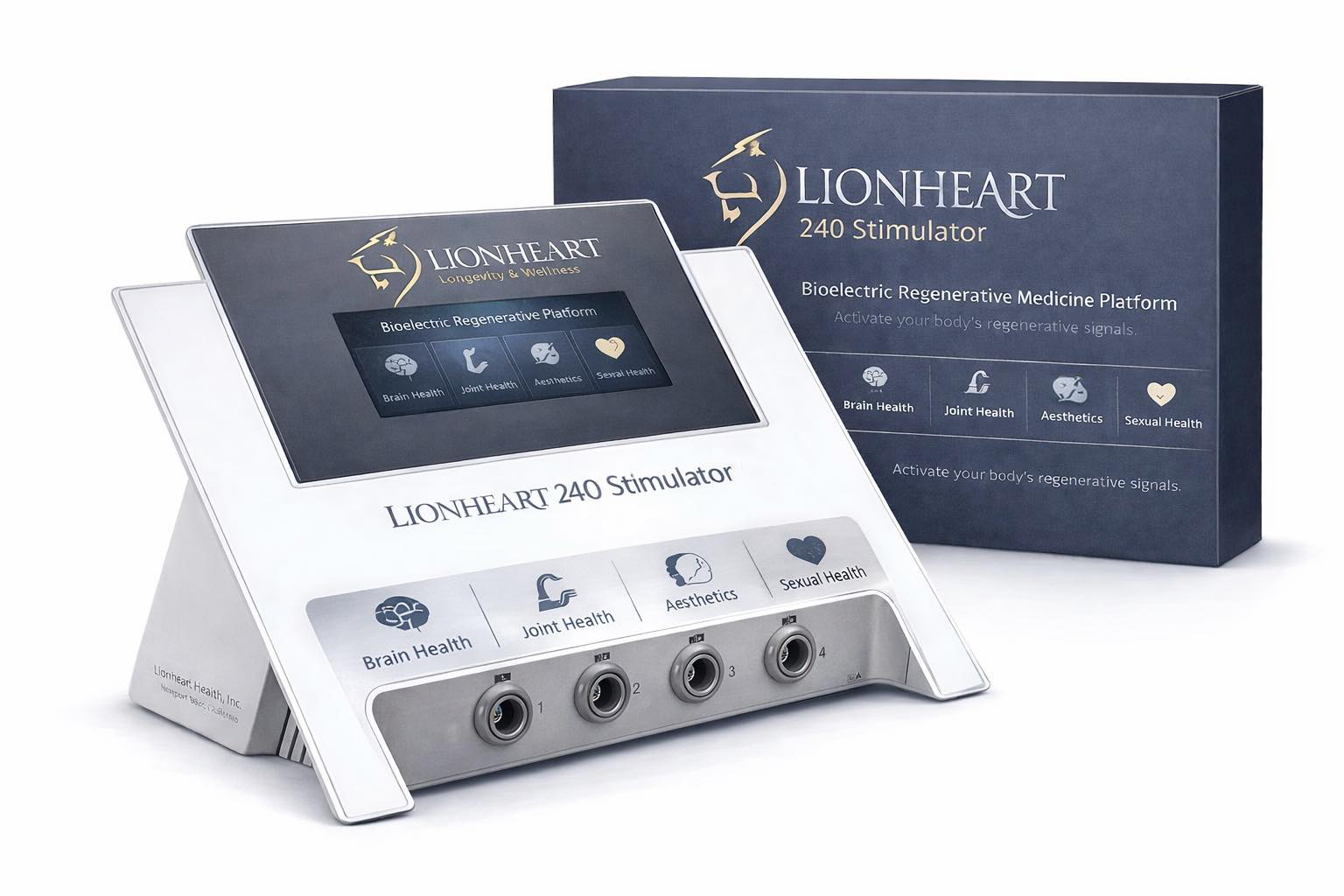
Lionheart Stimulus 240 Stimulator
The Lionheart Stimulus™ 240 Stimulator is a professional-grade 4-channel electrotherapy…
$21,995.00

EarCell is a startup within the Leonhardt Ventures Cal-X Stars Business Accelerator and Leonhardt’s Launchpads Utah focused on hearing loss recovery via regeneration.
Discover our background, mission, and the world-class research driving our next-generation medical technology.
Our story begins in the labs of Dr. Robert Becker, the Author of the 1985 book The Body Electric, in the early 1970’s. He asked “Can we achieve organ regeneration with a bioelectric stimulation approach?” The idea revolved around taking cues from regenerative biology, and then applying carefully selected bioelectric signals that can target relevant pathways to directly heal cells and tissues in place within the body. The precise controlled bioelectric signaling is intended to activate those cells and protein expressions in a way that allows the body to heal itself. Dr. Becker published a series of experiments where he demonstrated the ability for bioelectric stimulation to influence the regeneration and healing of organs and limbs in amphibians and other small animals. Shortly after the publication of The Body Electric Howard J. Leonhardt the founder of Leonhardt Ventures reached out to Dr. Becker to initiate a research collaboration.
In 1988 Leonhardt Ventures collaborative advisor and researchers Dr. Race Kao and Dr. George Magovern completed the first cases of stem cell repair of damaged large animal hearts, published in 1989 in The Physiologist. This eventually led to the Leonhardt organization leading a team in The Netherlands the completed the landmark pioneering first-in-man case of non-surgical muscle stem cell repair of human heart. In 1999 Leonhardt collaborative researcher Dr. Shinichi Kanno published in the American Heart Association Journal CIRCULATION the first paper on bioelectric ischemic limb regeneration. This led to an issued U.S. patent filed by the Leonhardt team on behalf of Dr. Kanno and to the formation of Vascustim.
In total Howard J. Leonhardt the Founder of EarCell has 21 issued U.S. patents related to organ regeneration and recovery and dozens more patent claims currently pending at the USPTO. One of the earliest of these patents filed in July 2001 described for the first time a bioelectric stem cell homing signal. A signal that attracts a body’s own stem cells from bone marrow, fat tissue and circulated blood to a specific stimulated target tissue on demand.
EarCell was founded in 2016 to translate the breakthrough work of our founder and his former late mentor Dr. Robert Becker into new treatments, where controlled tissue regeneration with locally delivered bioelectric signals, stem cells, growth factors, selected exosomes, selected Micro RNAs, selected alkaloids, matrixes and nutrient hydrogels could have profound therapeutic potential in restoring lost hearing and perhaps even giving hearing for the first time to those born without it. This is not any easy goal to accomplish but our EarCell team is dedicated to this task.
Want to learn more? Browse our clinical resources and scientific publications on our latest updates and insights.
The Lionheart Stimulus™ 240 Stimulator is a professional-grade 4-channel electrotherapy…
$21,995.00
Discover the science and innovation driving our advanced solutions, designed to deliver safe, effective, and transformative results.
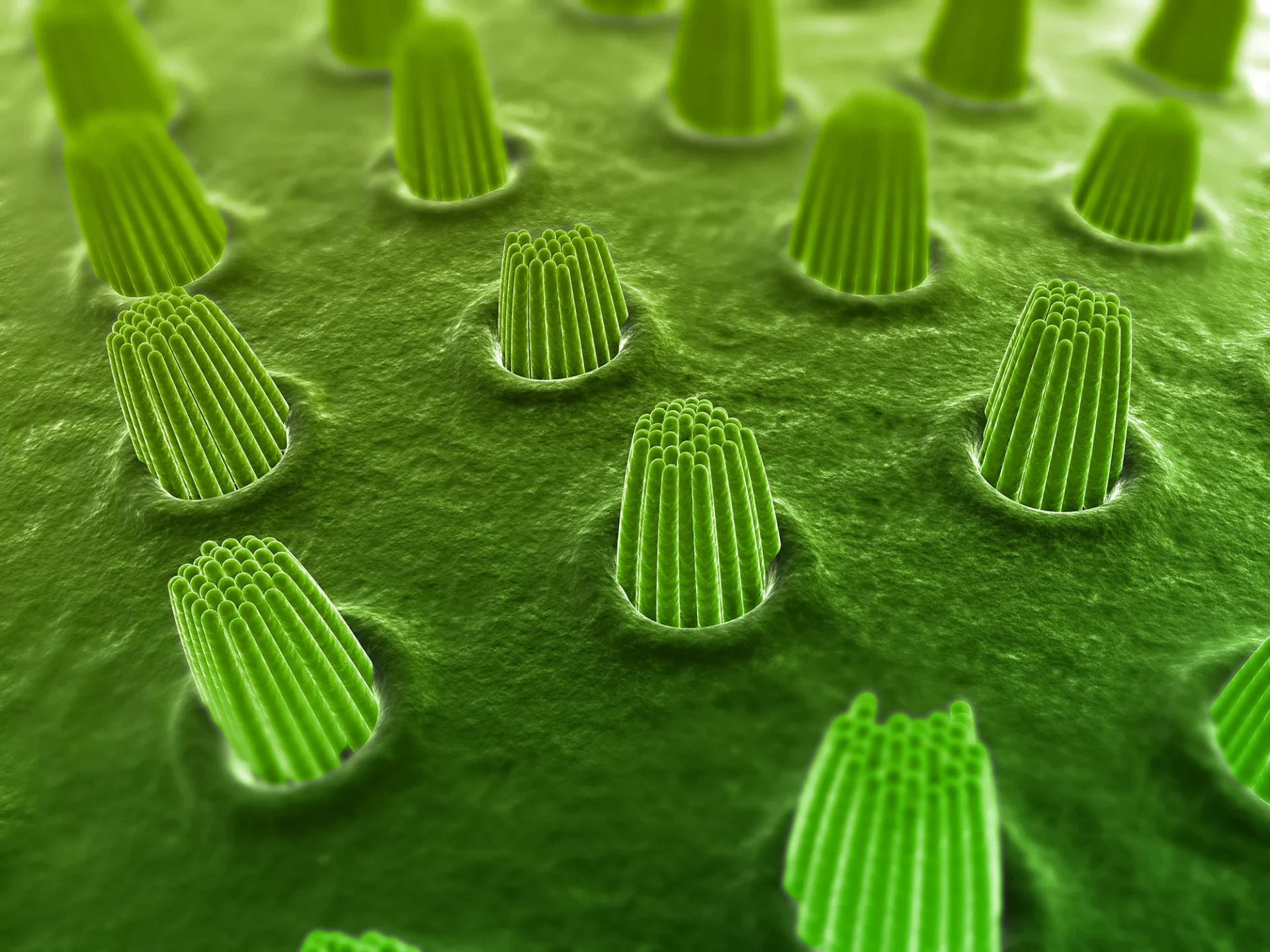
The company utilizes bioelectric stimulation to control the release of specific proteins on demand in a precise sequence:
To truly understand the future of hearing, we must look at the clinical evidence. This expert presentation highlights the breakthrough work in hair cell regeneration, validating the biological foundation upon which EarCell is built. Our approach translates these scientific insights into a targeted bioelectric protocol designed to trigger the body’s natural healing mechanisms.
Don’t see your question? Reach out and our clinical team will respond personally.
Investigational Use Only – We strive to recover hearing with treatments of bioelectric stimulation alone, preferably non-invasively, and resort to more serious treatment options such implantable bioelectric stimulators with implantable leads, micro infusion pumps and repeat delivery of our proprietary EC-15 fifteen component hearing regeneration composition, only when non-invasive bioelectric stimulation has not been fully effective in restoring hearing.
Our patented and patent pending bioelectric stimulation signals do the following:
Our EC-15 hearing regeneration composition is comprised of these components:
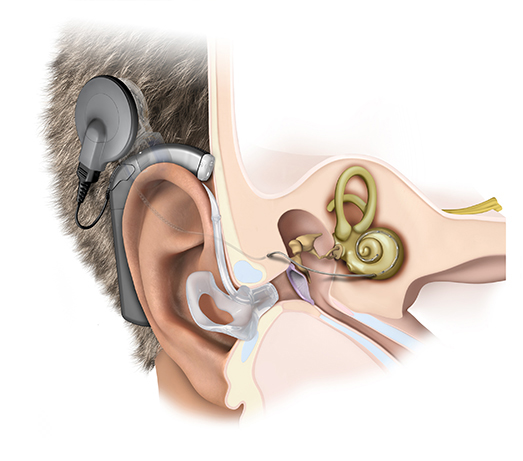
Our FluidSynch micro infusion pump was developed in collaboration with Fluid Synchrony LLC of Pasadena, CA with over $2 million in National Science Foundation Small Business Innovation Research funding. It is under the size of a nickel and can slowly infuse cells, growth factors and other fluids into any organ include the inner ear. The micro pump is programmable and re-fillable and can be ordered with one or two filling chambers. This pump can easily be hidden by a persons ear when in place .
Our bench top models 240 and 740 have FDA 510K market clearance for improving blood circulation, accelerated healing, improving muscle tone and for mild pain relief. These devices about the size of a personal computer. Our micro implantable device was developed in collaboration with QIG Greatbatch that invested more than $50 million in its development. The device is about the size of a quarter now. The team is working to reduce it soon to the size of a dime. The micro implantable device is available for investigational use only at this time.
Hearing loss can be due to several factors such as the aging process, exposure to loud noise, medications, infections, head or ear trauma, congenital (birth) or genetic factors, diseases, as well as a number of other causes. Recent data shows that about 20 percent of adults in the United States (48 million) report some degree of hearing loss. Hearing loss often occurs gradually throughout a lifetime.
If you have any symptoms of hearing loss, you should see a hearing instrument specialist to have a formal hearing evaluation. This hearing test allows the hearing instrument specialist to determine the type, nature and degree of your hearing loss and provide an indication as to how successful of a candidate you will be for hearing aids.
The hearing evaluation will also include a thorough case history and a visual inspection of the ear canal and eardrum. The results of the evaluation can be useful to a physician, if the hearing instrument specialist believes your hearing loss may benefit from medical intervention.
Results of the hearing evaluation are plotted on a graph called an audiogram. The audiogram provides a visual view of your hearing test results across various pitches or frequencies, especially the ones necessary for understanding speech.
The audiogram and results from your speech understanding tests are used to create a prescription by which hearing aids are programmed, if necessary.
After you undergo a hearing evaluation, the results are plotted on a chart called an audiogram. Loudness is plotted from top to bottom. The top of the graph is very quiet and the bottom of the graph is very loud. Frequency, or pitch, from low to high, is plotted from left to right. Hearing level (HL) is measured in decibels (dB) and is described in general categories, not by percentages. The general hearing loss categories used by most hearing professionals are as follows:
There are four types of hearing loss:
1. Sensorineural hearing loss: When the problem is in the inner ear, a sensorineural hearing loss is the result. This commonly occurs from damage to the small hair cells, or nerve fibers, in the organ of hearing. Sensorineural hearing loss is the most common type of hearing loss and accounts for more than 90 percent of hearing loss in all hearing aid wearers. The most common causes of this hearing loss are age-related changes and noise exposure. Loss may also result from disturbance of inner ear circulation, increased inner ear fluid pressure, or from disturbances of nerve transmission. There are many excellent options for the patient with sensorineural hearing loss.
2. Conductive hearing loss: When there is a problem in the external or middle ear, a conductive hearing impairment occurs. Conductive hearing loss occurs when sound is not conducted efficiently through the ear canal, eardrum, or tiny bones of the middle ear, resulting in a reduction of the loudness of sound that is heard. Conductive losses may result from earwax blocking the ear canal, fluid in the middle ear, middle ear infection, obstruction of the ear canal, perforation (hole) in the eardrum membrane, or disease of any of the three middle ear bones. All conductive hearing losses should be evaluated by a physician to explore medical and surgical options.
3. Mixed hearing loss – When there are problems in the middle and inner ear, a mixed hearing impairment is the result (i.e. conductive and a sensorineural impairment).
4. Auditory neuropathy spectrum disorder (ANSD): The least common hearing impairment is ANSD. This type of loss requires more in-depth diagnostic testing, including a hearing evaluation with pure tones, otoacoustic emissions (OAEs) and auditory brainstem response (ABR) testing. In this type of hearing loss, the nerve fibers in the organ of hearing typically appear to be functioning well, but a breakdown of the information occurs along the pathway to the brain. A person may still have normal hearing to sounds, but the sound is not encoded properly the brain. This type of hearing disorder is diagnosed more often in children, due in part to newborn hearing screenings that use automated ABR equipment and routine speech screenings by pediatricians and school systems, but can be present in adults as well.
WARNING: EarCell products are Investigational Use Only at this time and are not yet proven to be safe or effective in statistically significant randomized, blinded, placebo controlled trials. Not available for sale.
Want to learn more? Browse our clinical resources and scientific publications on our comprehensive suite of targeted treatments.
This section features the foundational research and literature that form the scientific backbone of EarCell’s technology, specifically focused on bioelectric principles and genetic factors.
Evidence of the team’s historical success in regenerating vital organs, providing the clinical proof-of-concept for our current ear-cell protocols.
Technical articles and peer-reviewed reviews that examine how electrical stimulation and specific proteins affect the auditory cortex and inner ear.
Contemporary news, clinical insights, and breakthroughs in stem cell therapy and hair cell regeneration from leading global institutions.
Want to learn more? Browse our clinical resources and scientific publications on our latest updates and insights.
CAUTION Disclaimer and Warning: Products described on this web site are in early stage development and are not yet proven safe or effective in statistically significant controlled clinical studies. Any statement or phrases implying efficacy or safety in any form are considered modified by “intended to” or “designed to”. Investigational use only in countries where investigation is permitted by law and proper filings have been made and appropriate regulatory clearances have been granted. Any use of the product(s) must be in an authorized clinical study with institutional review board (ethics committee) approval and proper patient consent procedures followed. For other countries product is only available for laboratory investigation by credentialed institutions and investigators with proper clearances with a research agreement in place with a study sponsor. NOT AVAILABLE FOR SALE.
Take the first step towards better results in less time. Whether you are an individual looking to restore your hearing or a clinician wanting to offer the latest regenerative technology to your patients, our team is here to help you get started with EarCell. EarCell is a startup within the Leonhardt Ventures Cal-X Stars Business Accelerator and Leonhardt’s Launchpads Utah focused on hearing loss recovery via regeneration.