Several treatment interventions involve electrical stimulation.
Some are more developed than others, but they all show significant potential to improve one’s quality of life after spinal cord injury.
In the following sections, we’ll go over 5 different ways spinal cord injury patients can utilize electrical stimulation.
1. Epidural Stimulation
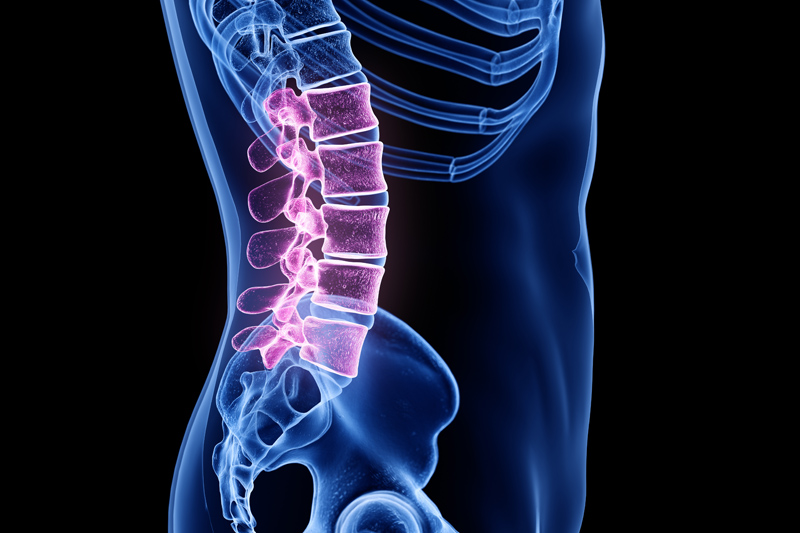
Epidural stimulation is an invasive type of electrical stimulation that can significantly improve mobility after spinal cord injury. By implanting a stimulator and 16-electrode array to the spinal column, electrical currents can excite motor neurons below the level of injury to promote movement.
Clincial trials have demonstrated that even individuals with complete spinal cord injuries may be able to recover over-ground walking by using a combination of epidural stimulation and intensive gait training.
Additionally, epidural stimulation can help activate spinal cord circuits that can improve bowel and bladder control and stabilize blood pressure.
2. Functional Electrical Stimulation (FES)
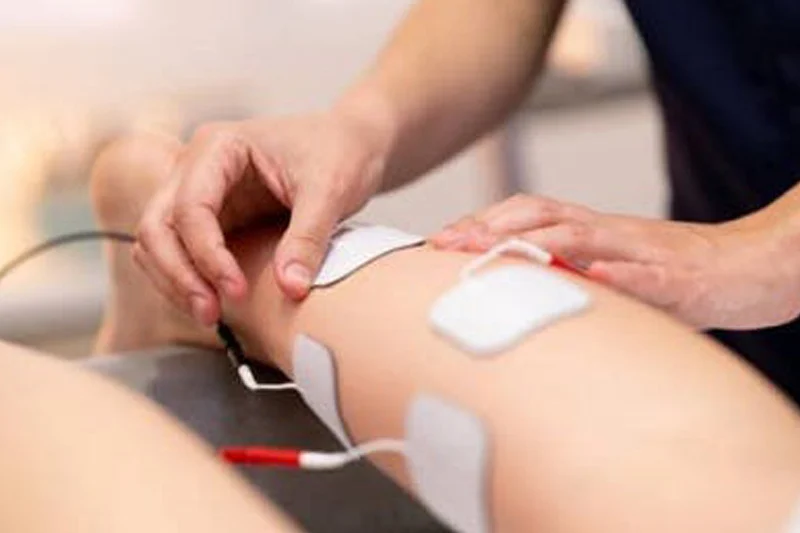
Patient using functional electrical stimulation for spinal cord injury recovery.
Functional electrical stimulation is a non-invasive treatment option. Individuals simply place the electrodes on the surface of the skin and control the electric emissions on a device.
While epidural stimulation applies electric currents directly to the spinal cord, FES applies them to the peripheral nerves that stimulate muscle contractions.
During FES, the patient must also perform a task using the stimulated muscles.
By directly activating muscle contractions, FES can help improve circulation, range of motion, and muscle strength.
3. Transcutaneous Electrical Nerve Stimulation (TENS)
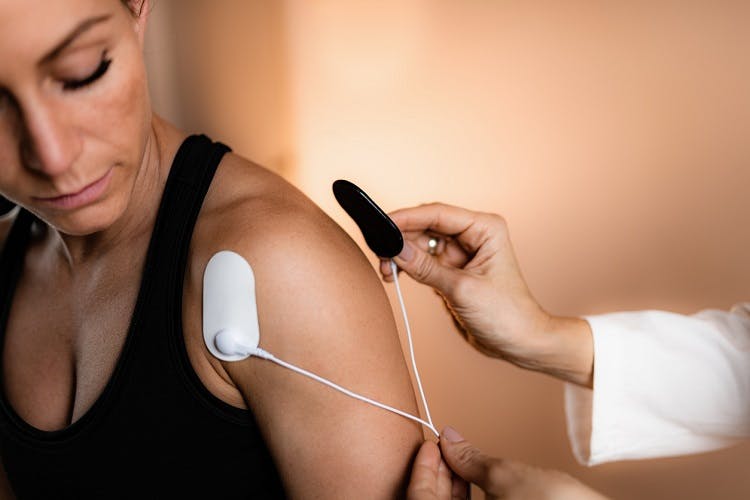
Another non-invasive form of electrical stimulation for spinal cord injury patients is transcutaneous electrical nerve stimulation.
It involves placing electrodes on the skin to stimulate sensory nerves.
TENS focuses on relieving pain after spinal cord injury, not movement.
It works by blocking pain signals and stimulating the production of endorphins.
4. Intraspinal Microstimulation (ISMS)
Another electrical stimulation treatment for SCI is intraspinal microstimulation.
Intraspinal microstimulation involves implanting thin, flexible electrode wires into the lumbar region of the spinal cord. This allows for more selective muscle activation.
The hair-like wires have to be placed inside the gray matter of the spinal cord, which sends electric currents directly to the motor pools responsible for controlling movement.
Because of the increased precision in stimulating the spinal circuits, ISMS should hypothetically lead to more stable functional outcomes.
5. Brain-Computer Interface
The last treatment that uses electrical stimulation for spinal cord injury is brain-computer interface.
This process goes by many different names including brain-machine interface, brain-controlled interface, neural-control interface, and mind-machine interface; however, they all refer to the same process.
Brain-computer interface involves placing electrodes near the primary motor cortex of the brain to monitor the intent to move.
The electrodes then stimulate electrical currents to restore functional activity in paralyzed limbs.
Just by thinking about walking, people can control the electrical stimulation that enables movement of the legs.
Although the idea is still in earlier stages of research and needs further development, brain-computer interface appears to be a promising treatment for SCI patients with lower-body paralysis (paraplegia).
The video below shows a patient with paraplegia achieving over-ground walking during a non-invasive brain-controlled interface trial.