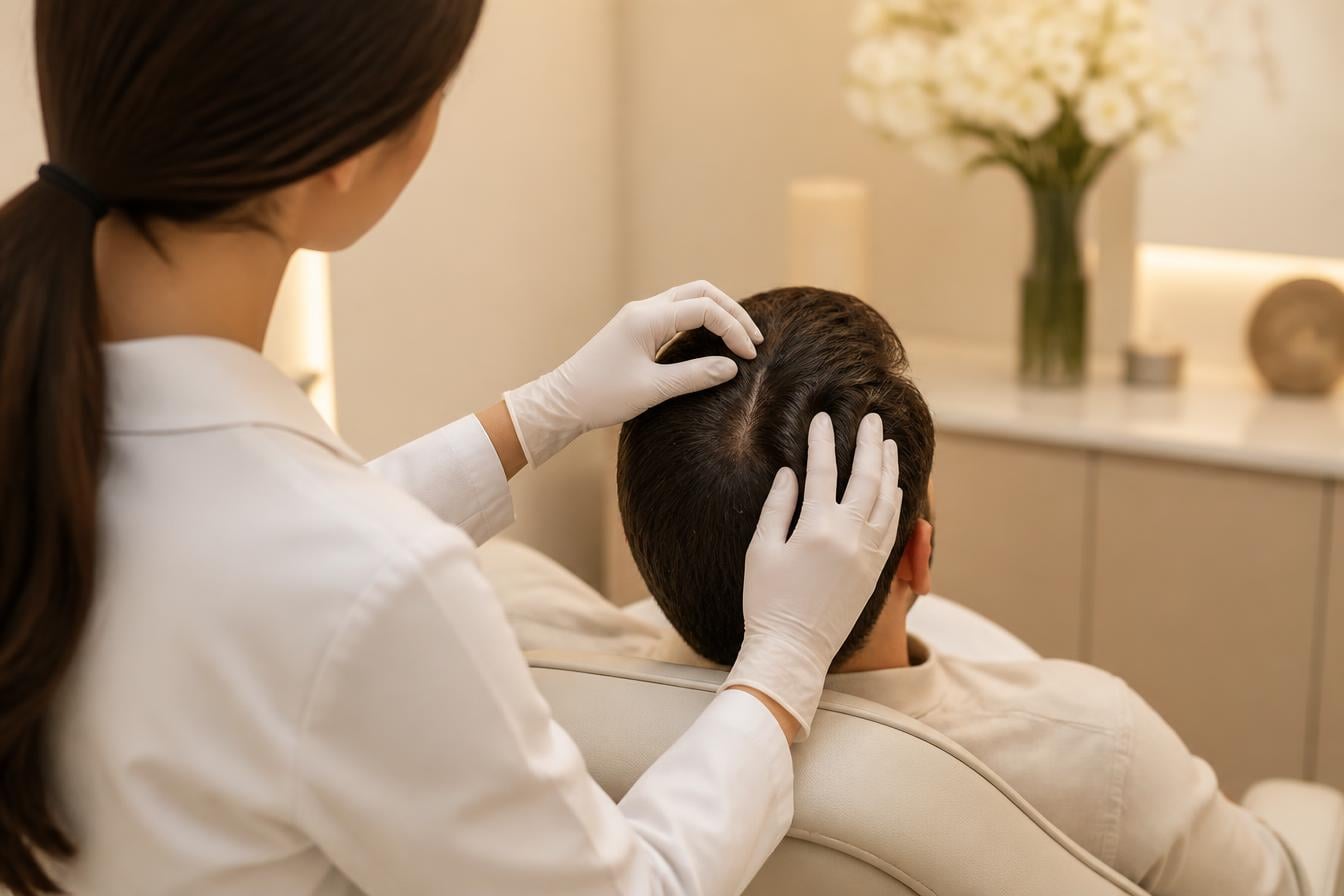
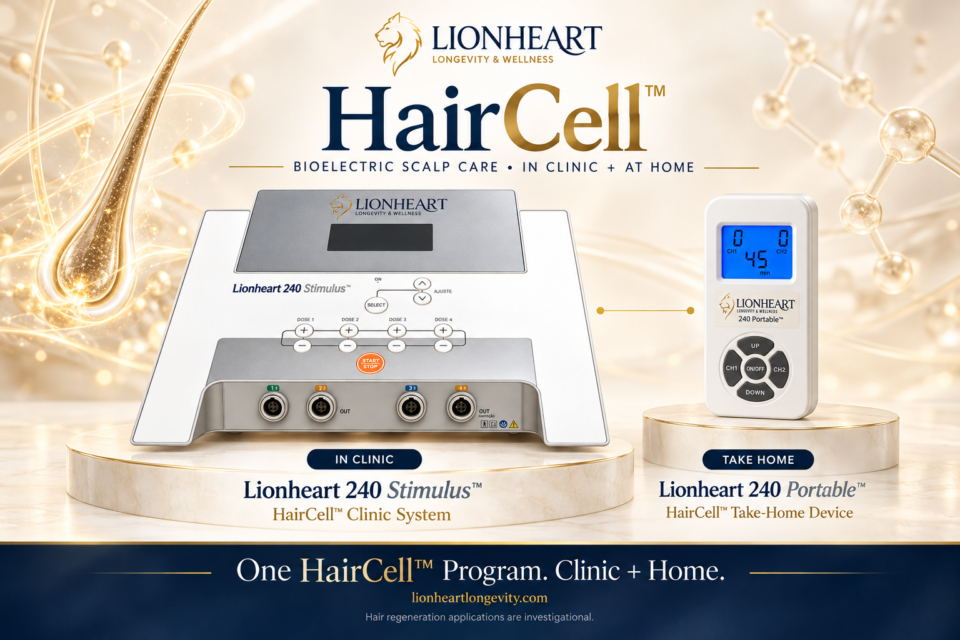
Company reports approximately 30% increased hair density in 12 weeks in early HairCell™ program observations and a 300% increase in regeneration-associated proteins in separate laboratory studies. Note – Clinic device has more precise signaling for better protein expression control results. Only available to clinicians.
HUNTINGTON BEACH, Calif., October 2, 2026 — Lionheart Health, Inc. announced that it is preparing a provisional patent application covering its Bioelectric Enhanced Hair Peptide Stack for Hair Regeneration, combining seven peptides with targeted bioelectric scalp stimulation through the Lionheart 240 Stimulus™ platform.
The HairCell™ approach brings together peptide formulations, scalp delivery methods and coordinated bioelectric stimulation. The planned application will describe these combinations and treatment sequences intended to support hair and scalp health.
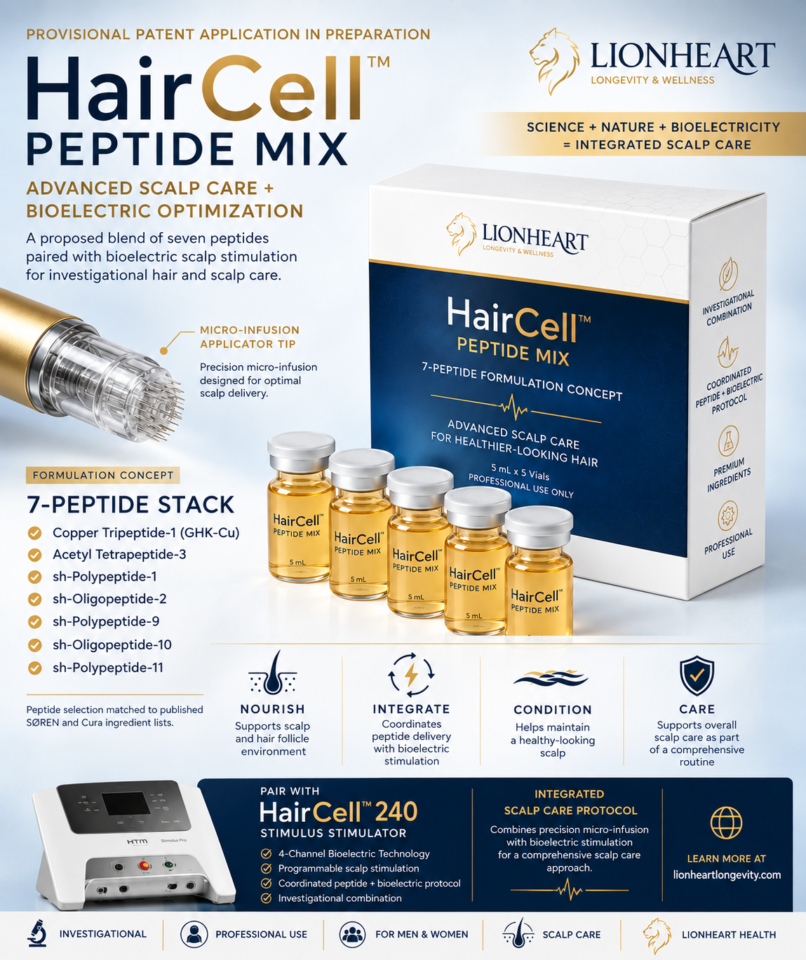
Seven-Peptide Stack
The formulation incorporates:
-
Copper Tripeptide-1 (GHK-Cu)
-
Acetyl Tetrapeptide-3
-
sh-Polypeptide-1
-
sh-Oligopeptide-2
-
sh-Polypeptide-9
-
sh-Oligopeptide-10
-
sh-Polypeptide-11
Lionheart is investigating whether combining these peptides with targeted bioelectric stimulation can improve hair regeneration outcomes beyond either approach alone.
Laboratory Findings at UCI Research Park
In separate laboratory studies conducted at Lionheart Health’s R&D Lab at UCI Research Park, the company reports achieving a 300% increase over baseline in measured regeneration-associated proteins, including platelet-derived growth factor (PDGF), following bioelectric stimulation of skin, muscle and scalp-derived cells.
These findings provide a laboratory basis for further investigation of bioelectric stimulation as a means of influencing cellular signals involved in tissue repair and regeneration. The work was conducted by Lionheart Health at its laboratory; the location does not imply UCI sponsorship or endorsement.
The laboratory protein findings are distinct from the company’s human hair-density observations and do not establish that the seven-peptide combination produces the same response in patients.
Early HairCell™ Results
Lionheart reports preliminary observations of approximately 30% increased hair density after 12 weeks in its HairCell™ treatment program.
These observations relate to the broader program and do not establish the independent contribution of the seven-peptide stack, bioelectric stimulation or other treatment components. Further controlled studies are needed to establish the combination’s safety, effectiveness and durability.
Proposed Quote — Howard J. Leonhardt
“Our research brings together two areas of development: targeted bioelectric stimulation and a seven-peptide hair and scalp formulation,” said Howard J. Leonhardt, Executive Chairman and Co-CEO of Lionheart Health. “The laboratory protein findings and early HairCell observations encourage us to continue investigating this combination while preparing intellectual property protection.”
Note – Accessible only by joining an IRB approved HairCell TM Plus Peptides Clinical Study with Patient Consent at an Authorized Clinic.
Patent Application in Preparation
The provisional patent application is being prepared. Lionheart intends to seek protection for aspects of the integrated bioelectric and peptide approach, including formulations, delivery methods and treatment sequencing. The combined hair regeneration approach remains investigational.
About Lionheart Health, Inc.
Lionheart Health develops bioelectric technologies and integrated programs focused on regenerative health, longevity and wellness. Its HairCell™ platform explores combinations of scalp stimulation, peptide formulations and complementary approaches for hair and scalp health.