
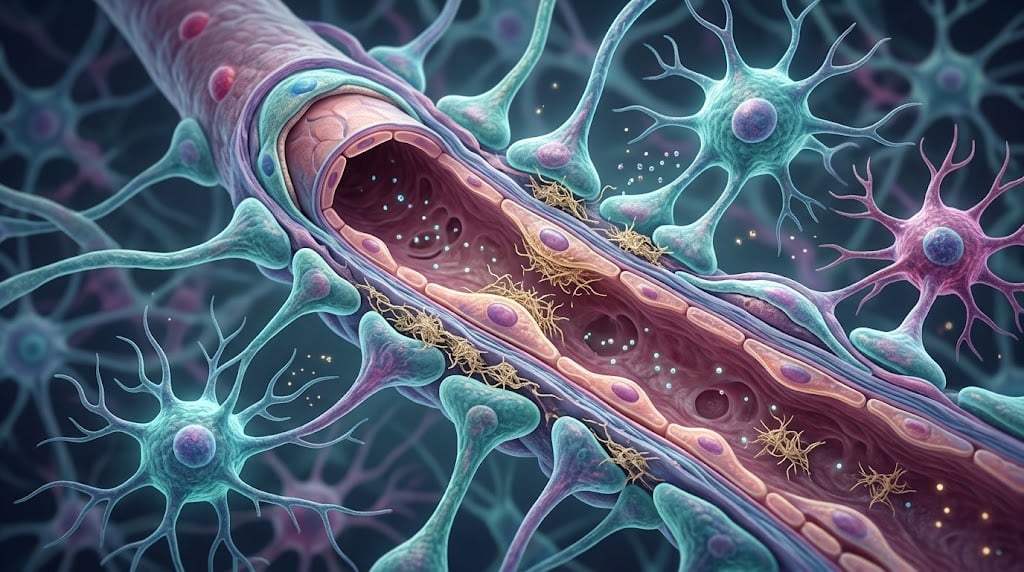
Alzheimer’s research has long examined amyloid plaques and tau tangles. A September 22 Longevity Lifehacks article draws attention to another part of the picture: the blood–brain barrier, the network of cells around brain blood vessels that regulates what enters and leaves the brain. The article highlights a new Nature Aging study linking excess fibronectin around those vessels to barrier dysfunction, particularly in people carrying the APOE4 genetic risk factor. (longevitylifehacks.substack.
Fibronectin is a normal structural protein. The concern is its excessive accumulation in the wrong place. In the new study, researchers examined human brain tissue and used human vascular models and animal models to investigate what happens when astrocytes, cells that help support brain blood vessels, produce too much fibronectin. In the experimental models, that buildup disrupted signals needed to maintain the barrier. Reducing fibronectin or restoring those signals improved barrier function in those models. This is a promising mechanism to investigate, although it has not yet produced a proven treatment for Alzheimer’s disease. (nature.com)
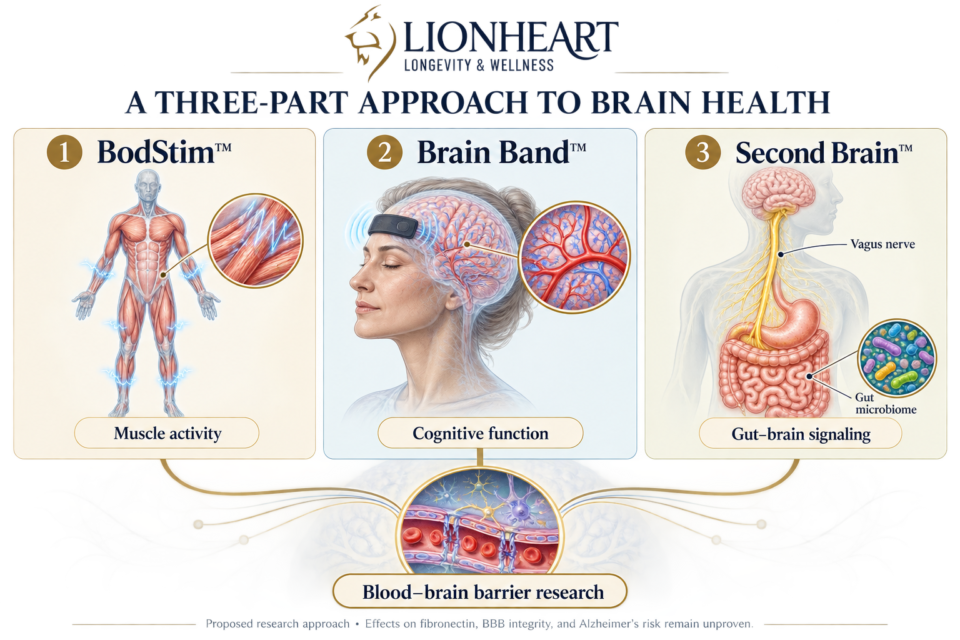
At Lionheart Health, the research raises a question that connects three of our technologies: Can supporting muscle activity, cognitive function, and gut–brain signaling together help us better understand and support brain health as we age?
BodStim™ addresses the muscle side of that question. Muscle activity sends biological signals beyond the muscles themselves. Exercise research suggests that physical activity may influence inflammation and blood–brain barrier function, and experimental work has identified pathways through which exercise related signals affect brain blood vessels. BodStim’s electrical muscle stimulation offers a way to engage muscles within a broader exercise program. The next step is to test whether BodStim produces relevant effects in people; findings from conventional exercise studies cannot establish that on their own. (pubmed.ncbi.nlm.nih.gov, cell.com)
Brain Band™ addresses the cognitive side. We are interested in measuring memory, attention, mood, and other aspects of performance during its bioelectric stimulation program. The fibronectin findings add a useful challenge for future research: when cognitive measures change, can we also identify changes in validated measures of brain vascular health? Better performance on a cognitive test would not, by itself, show that fibronectin deposits have decreased or that the blood–brain barrier has been repaired.
Second Brain™ addresses the gut–brain connection. The gut communicates with the brain through immune, metabolic, and neural pathways. Research is exploring how these pathways relate to cognitive aging. Second Brain gives us an opportunity to study gut related measures alongside muscle and cognitive outcomes, while testing each proposed mechanism on its own merits. Current evidence does not show that Second Brain removes fibronectin from brain vessels or prevents Alzheimer’s disease. (nih.gov, pmc.ncbi.nlm.nih.gov)
A practical Lionheart study could examine the three programs together over time, tracking muscle function, standardized cognitive tests, gut and inflammatory markers, and appropriate measures of brain vascular health. APOE status could be considered where participants consent and the study design supports it. Such a study would help distinguish an encouraging change in symptoms or performance from evidence of a specific effect on the blood–brain barrier.
The fibronectin discovery has made the research question sharper. It suggests that the health of the brain’s blood vessels deserves attention alongside the neurons they protect. BodStim, Brain Band, and Second Brain give Lionheart three ways to investigate a broader muscle–brain–gut approach. Whether any of these technologies changes fibronectin accumulation, blood–brain barrier integrity, or Alzheimer’s risk remains an open question for clinical research.