
Investigational wearable platform will evaluate muscle strength, exercise tolerance, quality of life and potential kidney-health benefits, alongside muscle, cognitive and immune healthspan outcomes
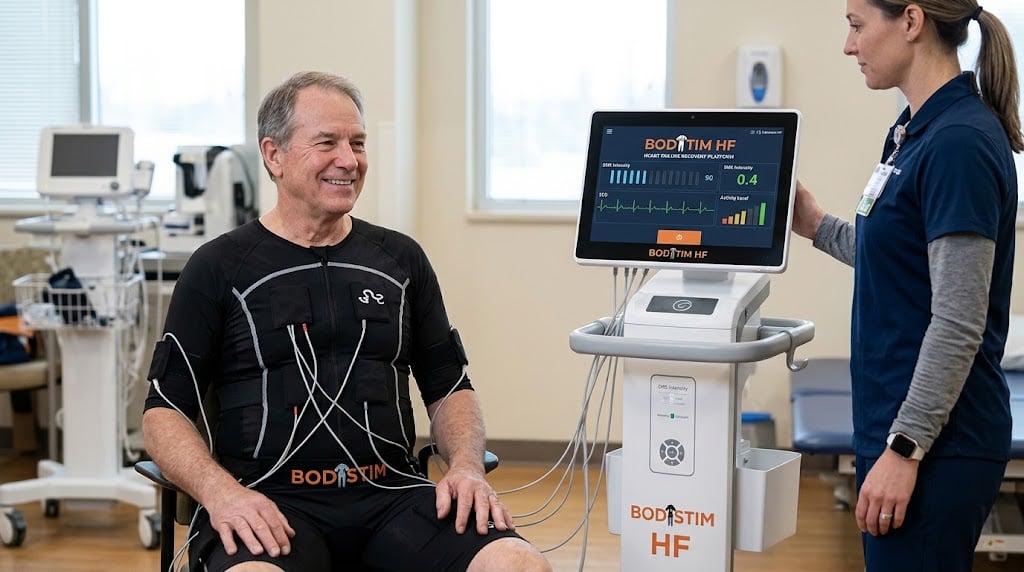
HUNTINGTON BEACH, Calif., October 21, 2026 — Lionheart Health, Inc. today unveiled BodStim™ HF, an investigational wearable electrical muscle stimulation platform being developed to support rehabilitation and functional recovery in patients with heart failure. The company is launching its clinical development program to evaluate safety, tolerability and potential improvements in physical function, reduction of hospitalization time, quality of life, leg strength, grip strength, gait speed, muscle mass, brain health and immunity strength while investigating selected protein-signaling pathways and the interconnected health of the heart, kidneys and skeletal muscles.
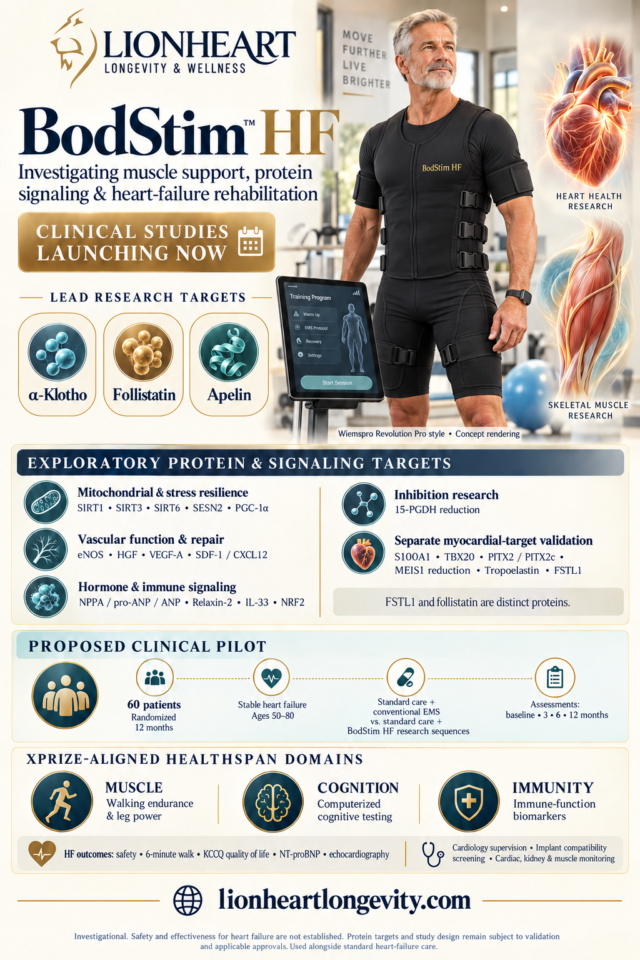
BodStim HF combines a professional EMS suit platform with investigational stimulation programming intended for physician-supervised evaluation alongside standard heart-failure care. The program’s lead protein research targets include α-Klotho, follistatin and apelin, with additional investigations addressing vascular function, mitochondrial resilience and cellular stress responses.
“Our goal is to help people living with heart failure regain strength, mobility and greater independence,” said Howard J. Leonhardt, Executive Chairman and co-CEO of Lionheart Health. “With BodStim HF, we intend to study both practical rehabilitation outcomes and the underlying biology, including whether selected bioelectric programs can influence protein signaling associated with heart, kidney and muscle health.”
A controlled clinical plan
The proposed initial study would enroll approximately 60 adults ages 50–80 with stable symptomatic heart failure, with participants stratified by reduced or preserved ejection fraction. Participants would be randomized to standard medical care plus conventional EMS or standard medical care plus BodStim HF investigational stimulation sequences, with matched exercise exposure and assessment by blinded evaluators.
The proposed 12-month study would include assessments at baseline and months 3, 6 and 12. Principal outcomes would include safety, tolerability and changes in six-minute walk distance. Additional measures would include Kansas City Cardiomyopathy Questionnaire quality-of-life scores, muscle strength, NT-proBNP, echocardiographic findings and heart-failure hospitalizations. As a pilot, the study would primarily inform feasibility and the design of larger trials.
Investigating potential kidney-health benefits
The clinical plan also includes exploratory evaluation of kidney function and health, including creatinine- and cystatin C-based estimates of filtration, urine albumin-to-creatinine ratio, electrolytes and fluid status. These measures would help determine whether functional improvements are accompanied by favorable changes in cardiorenal health.
Kidney outcomes are particularly relevant to the program’s investigation of α-Klotho and the heart–kidney connection. However, changes in Klotho or other biomarkers would not, by themselves, establish improved kidney function. Whether BodStim HF can improve kidney function remains a question for clinical testing.
Connecting heart-failure rehabilitation with healthspan research
The proposed study would incorporate the three functional domains emphasized by XPRIZE Healthspan: muscle, cognition and immunity. Planned assessments include walking endurance and lower-body power, standardized computerized cognitive testing and selected immune-function measures. Alignment with these domains does not imply XPRIZE endorsement or establish eligibility for competition adjudication.
Mechanistic research would assess selected circulating proteins and, where feasible, tissue-specific responses. Additional candidates include SIRT3, SIRT6, sestrin-2, eNOS and HGF. Cardiac-specific targets such as S100A1 and experimental regeneration regulators would require separate validation before inclusion in patient treatment sequences.
Clinical activities will proceed under finalized protocols, informed consent, ethics review and applicable regulatory requirements. Safety planning includes cardiology oversight, screening for implanted-device compatibility and monitoring for arrhythmias, kidney injury and muscle injury.
Investigational status
BodStim HF’s safety and effectiveness for treating heart failure or improving kidney function have not been established. It is being developed as an adjunct to standard care. The announced study design and protein-target strategy remain subject to validation and refinement.
About Lionheart Health
Lionheart Health, Inc. develops bioelectric technologies and physician-led health optimization programs focused on functional health, regenerative medicine and healthy aging.
Learn more: lionheartlongevity.com
Company inquiries: cs@lionheartlongevity.com
Forward-Looking Statements: This release contains forward-looking statements concerning product development, clinical studies, biological mechanisms and potential benefits. Actual results, timelines and regulatory outcomes may differ materially. No clinical benefit is guaranteed.