
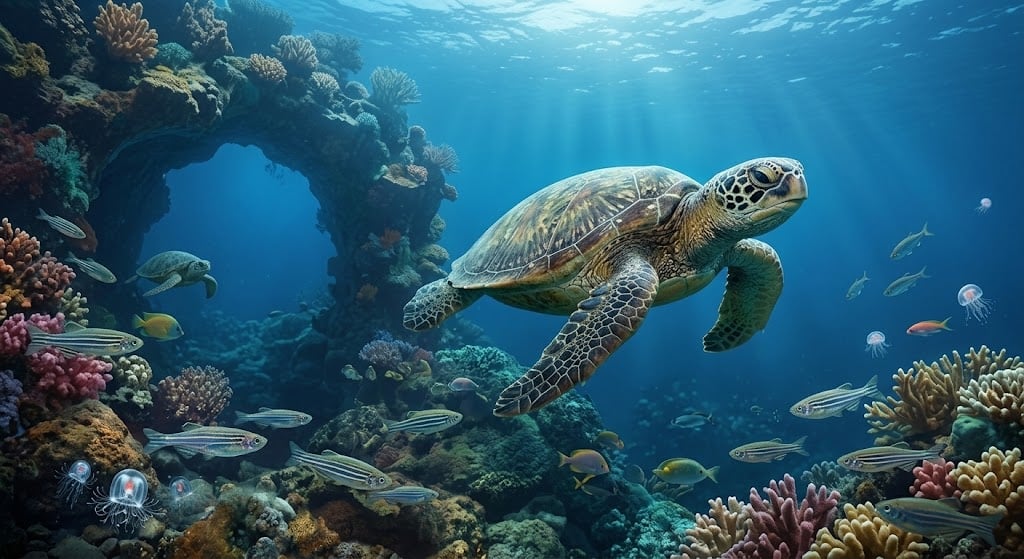
What a 194-year-old tortoise, a centuries-old shark, and animals that rebuild themselves reveal about the future of human healthspan.
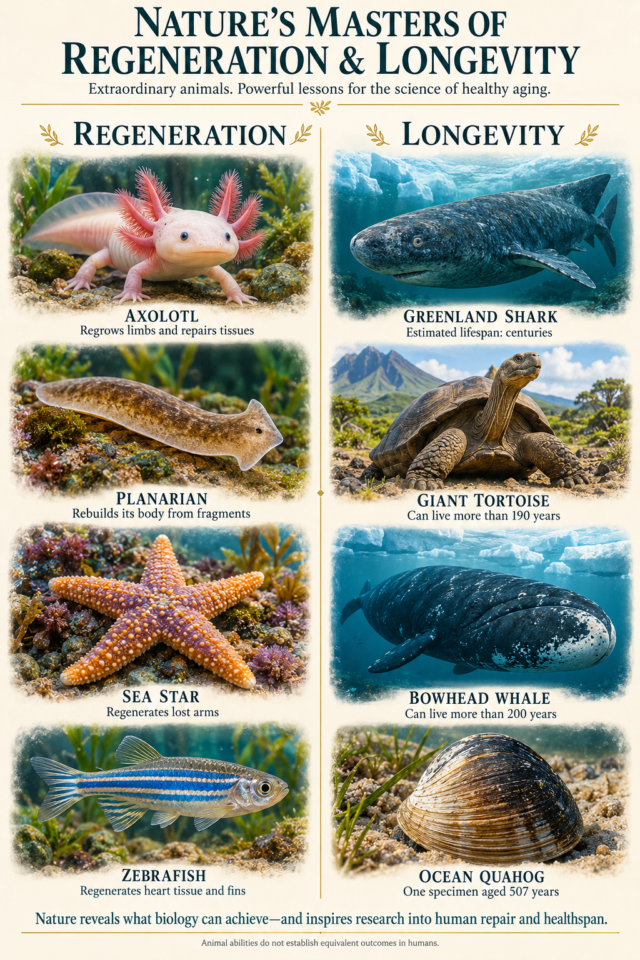
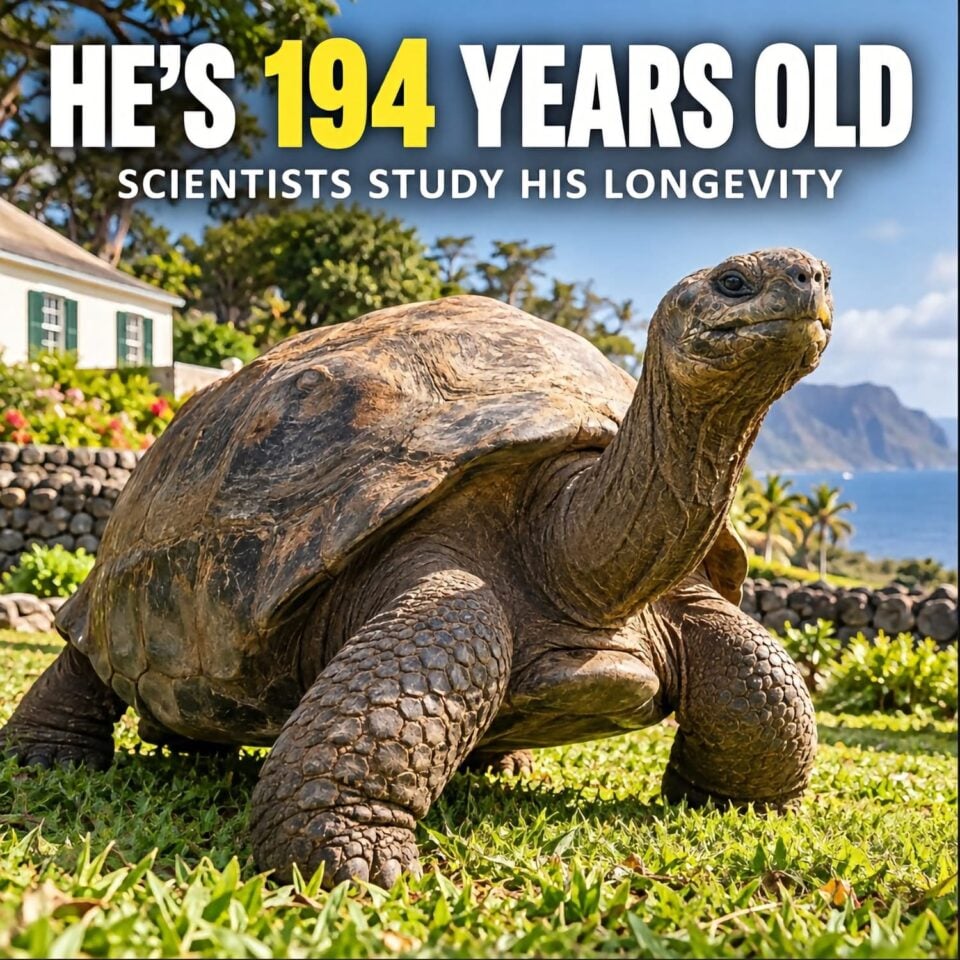
Jonathan, the giant tortoise living on Saint Helena, is estimated to be 194 years old in 2026. His approximate birth year is 1832—before the first practical telephone, powered flight, or antibiotics. His age is based on historical evidence rather than a recorded hatch date, but his extraordinary longevity is well established. (guinnessworldrecords.com)
Far beneath the North Atlantic, Greenland sharks offer an even more remarkable example. A landmark study estimated the oldest shark examined—a female just over five meters long—to be approximately 392 years old, with a broad estimated age interval of 272 to 512 years. That interval describes uncertainty about the animal’s age; it does not mean scientists have verified a 512-year-old shark. The study nevertheless established Greenland sharks as exceptionally long-lived vertebrates. (pubmed.ncbi.nlm.nih.gov)
These animals invite an ambitious question: could humans eventually gain some of the biological protections that allow other species to survive for centuries?
My view is that the potential for substantially longer, healthier human lives is coming into scientific view. Whether humans can reach 194 or 400 years remains unknown. But nature has given us concrete examples to investigate—and increasingly, tools to understand them.
The tortoise’s lesson: preserve the machinery of life
Jonathan’s importance extends beyond his age. In research published in October 2026, scientists examined his genome and epigenome—the chemical markings that help regulate which genes operate. They identified genetic differences associated with longevity pathways and unusually preserved patterns of gene regulation involving mitochondrial function. Mitochondria provide much of the energy cells need to work and maintain themselves. These findings are clues, rather than proof that any single mechanism explains his lifespan. (cam.ac.uk)
Earlier giant-tortoise genomic research identified differences in pathways involving DNA repair, immune function, and cancer biology. Together, these studies suggest that exceptional longevity may depend on several protective systems working together. (pubmed.ncbi.nlm.nih.gov)
The research opportunity is compelling: understand how long-lived animals protect their genetic information, sustain cellular energy, and manage damaged cells, then determine which protections can safely be strengthened in humans.
A longer-lasting body will need reliable maintenance across many systems.
The Greenland shark’s lesson: investigate how tissues endure
The Greenland shark’s age was estimated using radiocarbon measurements from proteins in the eye-lens nucleus, which form early in life and retain a chemical record useful for dating. The same study estimated sexual maturity at roughly 156 years, with substantial uncertainty. This is an animal whose life unfolds on a profoundly different timescale from ours. (pubmed.ncbi.nlm.nih.gov)
Its cold-water environment and slow pace of life are plausible contributors to longevity, but the dating study did not establish the mechanism responsible. Saying that low metabolism alone explains four centuries of survival would go beyond the evidence.
The deeper question is how a vertebrate’s tissues remain viable for so long. Researchers must separate the effects of environment, metabolism, genetics, and cellular maintenance. Any human application will come from identifying transferable mechanisms—not simply copying the shark’s lifestyle.
The zebrafish’s lesson: repair can mean rebuilding
Long life becomes more valuable when damaged organs can recover.
Zebrafish can regenerate injured heart muscle. Research tracing the origin of replacement cells showed that existing heart-muscle cells can partially relinquish their specialized state, divide, and help rebuild the damaged tissue. (nature.com)
This finding changes how we think about regenerative medicine. Replacement cells do not always have to come from an outside source. Under suitable biological conditions, cells already present in an organ may participate in rebuilding it.
The human opportunity is to discover whether comparable repair programs can be activated safely, with precise control over where growth begins and when it stops.
The axolotl’s lesson: regeneration requires coordination
An axolotl can regrow a lost limb. Producing a functional replacement requires coordinated reconstruction of multiple tissues, rather than simply encouraging cells to multiply.
A particularly revealing experiment showed that removing macrophages—immune cells involved in responding to injury—prevented limb regeneration and led to extensive scarring. The wound could close while the limb failed to return. (pubmed.ncbi.nlm.nih.gov)
The lesson is that the immune response helps determine the outcome of healing. Regeneration may require carefully timed immune activity, a supportive tissue environment, and signals that guide reconstruction.
For human medicine, this argues for studying the whole repair process. A powerful growth signal delivered into the wrong environment may never produce useful regeneration.
The jellyfish’s lesson: biological development can reverse direction
The jellyfish Turritopsis dohrnii can reverse its life cycle, returning from its adult form toward an earlier polyp stage. Comparative genomic research has investigated pathways associated with this extraordinary capacity, including genome maintenance and cellular reprogramming. (pubmed.ncbi.nlm.nih.gov)
Its popular description as “immortal” needs context: life-cycle reversal does not protect an individual from predators, infection, or environmental destruction.
Still, the scientific implication is profound. In this organism, adulthood is not an irreversible biological destination. The challenge is to learn whether selected aspects of cellular renewal can be reproduced in human tissues while preserving their function and identity.
The octopus’s lesson: restore function as well as structure
Octopuses contribute another piece of the puzzle: regeneration of damaged arms and nerves. Experimental research on the common octopus has examined nerve repair and functional recovery after injury. (pubmed.ncbi.nlm.nih.gov)
A replacement structure must reconnect and work. This makes the octopus valuable for understanding how tissue reconstruction and nervous-system repair cooperate.
Regenerative ability alone, however, does not establish exceptional lifespan. Longevity and regeneration are distinct capabilities that future medicine would ideally bring together.
What is on the horizon?
Taken together, these animals suggest a research agenda: preserve cellular machinery, protect genetic information, coordinate immune responses, rebuild damaged tissues, and restore function.
There is already experimental evidence that aspects of aging biology can be modified. For example, partial cellular reprogramming improved several age-associated features and extended lifespan in a mouse model of premature aging. That result does not establish centuries-long human lifespan, but it demonstrates that some aging-related changes are experimentally alterable. (pubmed.ncbi.nlm.nih.gov)
My interpretation is that meaningful advances in human healthspan are on the horizon. The timing and ultimate scale remain uncertain. Progress should be judged by stronger muscles, better cognition, resilient immunity, functioning organs, and fewer years of disability—not solely by changes in a laboratory aging marker.
Nature has already demonstrated survival across centuries, reconstruction of complex body parts, and reversal of a life cycle. Each example opens a different scientific door.
Our opportunity is to turn those discoveries into safe, measurable human benefits. We cannot yet promise the lifespan of a tortoise or a Greenland shark. We can pursue the mechanisms that make their lives possible, with the ambition that future generations may remain healthy far longer than we consider normal today.