
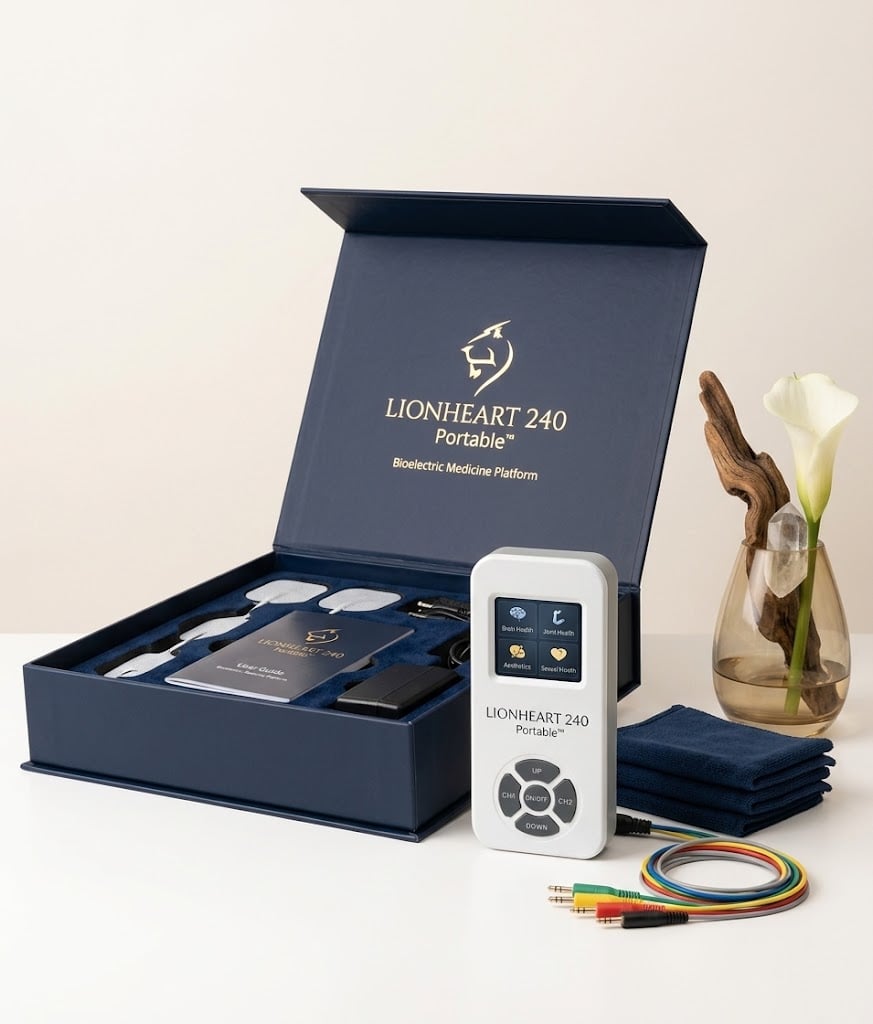
Lionheart 240 Portable™ Stimulator
Portable Bioelectric Stimulation for Continued Home Treatment Support The Lionheart…
$599.00

BreatheStim is a premier startup within the Leonhardt’s Launchpads innovation accelerator. We are dedicated to bringing the world’s most innovative electroceutical and regenerative therapies to local communities through a proven clinical franchise model
Discover our background, mission, and the world-class research driving our next-generation medical technology.
We are excited about your interest to become a franchisee, and become part of our mission to bring the most innovative and cutting edge personalized management and treatment of breathing.
When we opened our first location in Palm Desert, California in 2015, our goal was to be a driving force and an innovator in the breathing disorder treatment business. Since then, we’ve revolutionized the industry, developing proprietary procedures and services such as our combination ozone, light and bioregulatory treatment therapies. Through working with our team of licensed professionals, we strive to serve the growing market of those seeking to breathe better, sleep better and live healthier lives.
Dr. Blair Bittner the Chief Scientific and Medical Officer of StimCore and BreatheStim has revolutionized comprehensive and personalized breathing disorder management and treatment. Since opening our first Los Angeles area location in 2105, BreatheStim has been at the forefront in developing and utilizing the most cutting-edge technologies, products, and procedures to ensure that our clientele receive the best possible care and treatment.
These services, such as our proprietary SinuStim, TonqueStim, ArchStim and OMF Stim, provide our clients with the best possible treatment options on their journey to healthy breathing. At BreatheStim, we combine the worlds of medical practice, comprehensive training and support with breakthrough technology advancements to offer a unique melding of services to address a variety of breathing disorder recovery needs. Through our relationships with our team of doctors, industry experts, and trained staff, in conjunction with our state-of-the-art equipment, BreatheStim franchisees are able to provide their clients with the highest quality of service in a comfortable and supportive environment.
Our centers are beautifully designed, fitted and organized. Each center must operate under the direct supervision of a physician. In some situations the franchisee themselves will be that Supervising Physician, however that is not a requirement as franchisees can bring in independent physicians to serve in that role. We can assist non-physician franchisees locate the professionals they will need in order to operate a BreatheStim franchise center.
Thinking of partnering with us? As part of the BreatheStim team, we can offer you:
As the BreatheStim brand continues to grow on a national level, we’re looking for successful business owners to become a franchisee – people who are high energy, enthusiastic self-starters who are eager to build relationships in their community through a high end, specialized line of products and services. We look forward to working with franchisees who share our passion for bringing these cutting edge methods to the world.
If you’d like to learn more about the process of becoming a BreatheStim franchisee, complete our Request for Consideration Form here. Once we receive your information form, we’ll contact you to discuss the opportunities available to you.
Want to learn more? Browse our clinical resources and scientific publications on our latest updates and insights.
Portable Bioelectric Stimulation for Continued Home Treatment Support The Lionheart…
$599.00

Executive Chairman & CEO
Executive Chairman & CEO
Senior Medical Advisor Sleep Medicine
Senior Medical Advisor Sleep Medicine
Vice President Bioelectric Regeneration Research
Vice President Bioelectric Regeneration Research
Board Advisor
Board Advisor
Chief Clinical Studies Officer
Chief Clinical Studies Officer
Discover the science and innovation driving our advanced solutions, designed to deliver safe, effective, and transformative results.
BreatheStim is designed to deliver superior treatment speed and comfort. Our system treats 100% of sleep apnea patients, delivering results significantly faster and with much less pain than any traditional competitive therapy options.

BreatheStim is the only provider that strives to address all underlying causes of breathing disorders. We combine bioelectric controlled protein expression, re-alignment devices, and biologics to create the most complete solution for sleep apnea.
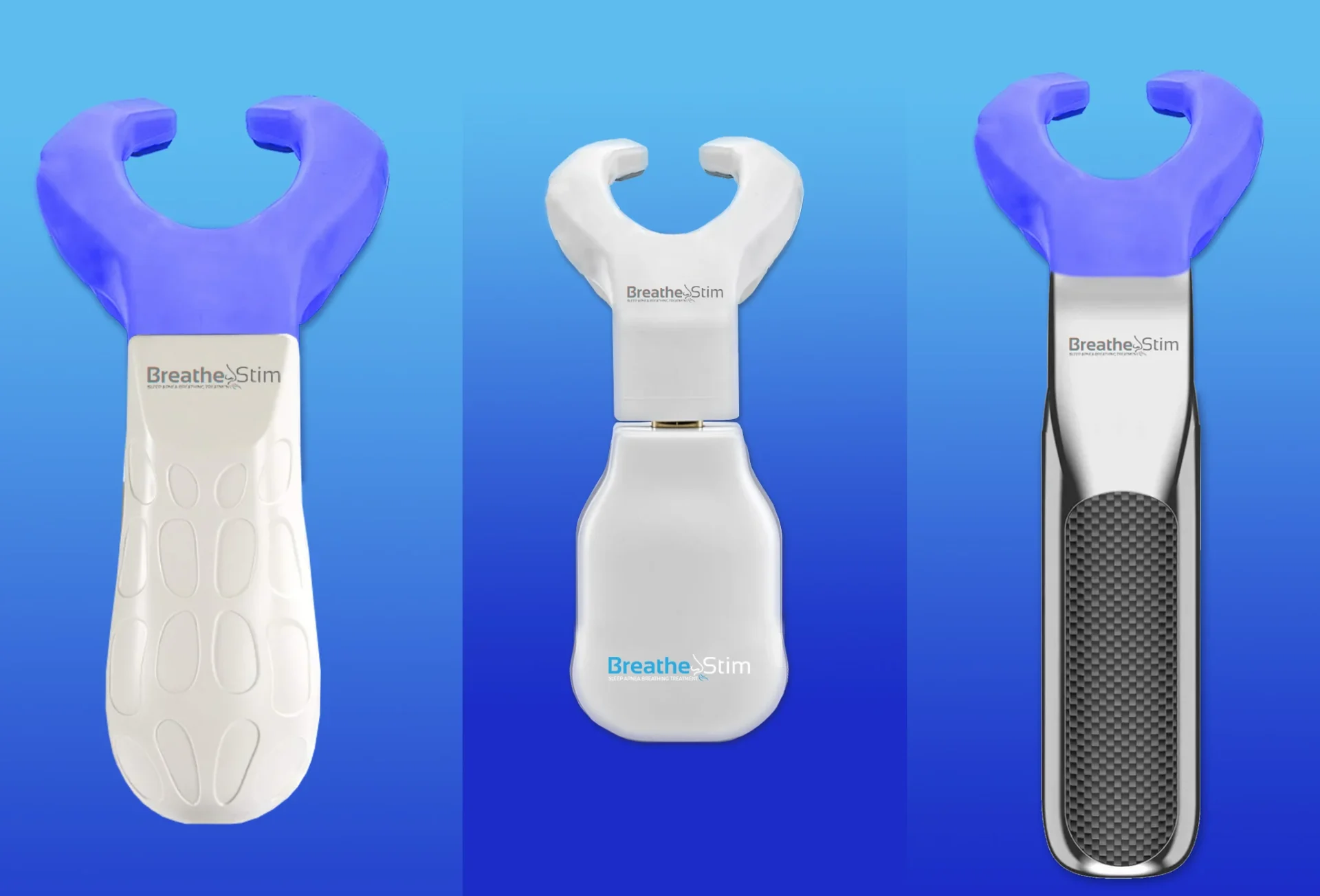
We utilize patented bioelectric stimulation to control specific protein expressions. This advanced approach triggers natural stem cell homing, bone re-alignment, and tissue regeneration to address the underlying biological causes of chronic breathing disorders. (19 words)
Untreated sleep apnea leads to severe long-term health complications for both children and adults. Our solutions target these risks directly to improve cardiovascular health, cognitive function, and emotional well-being across all patient age groups.
Don’t see your question? Reach out and our clinical team will respond personally.
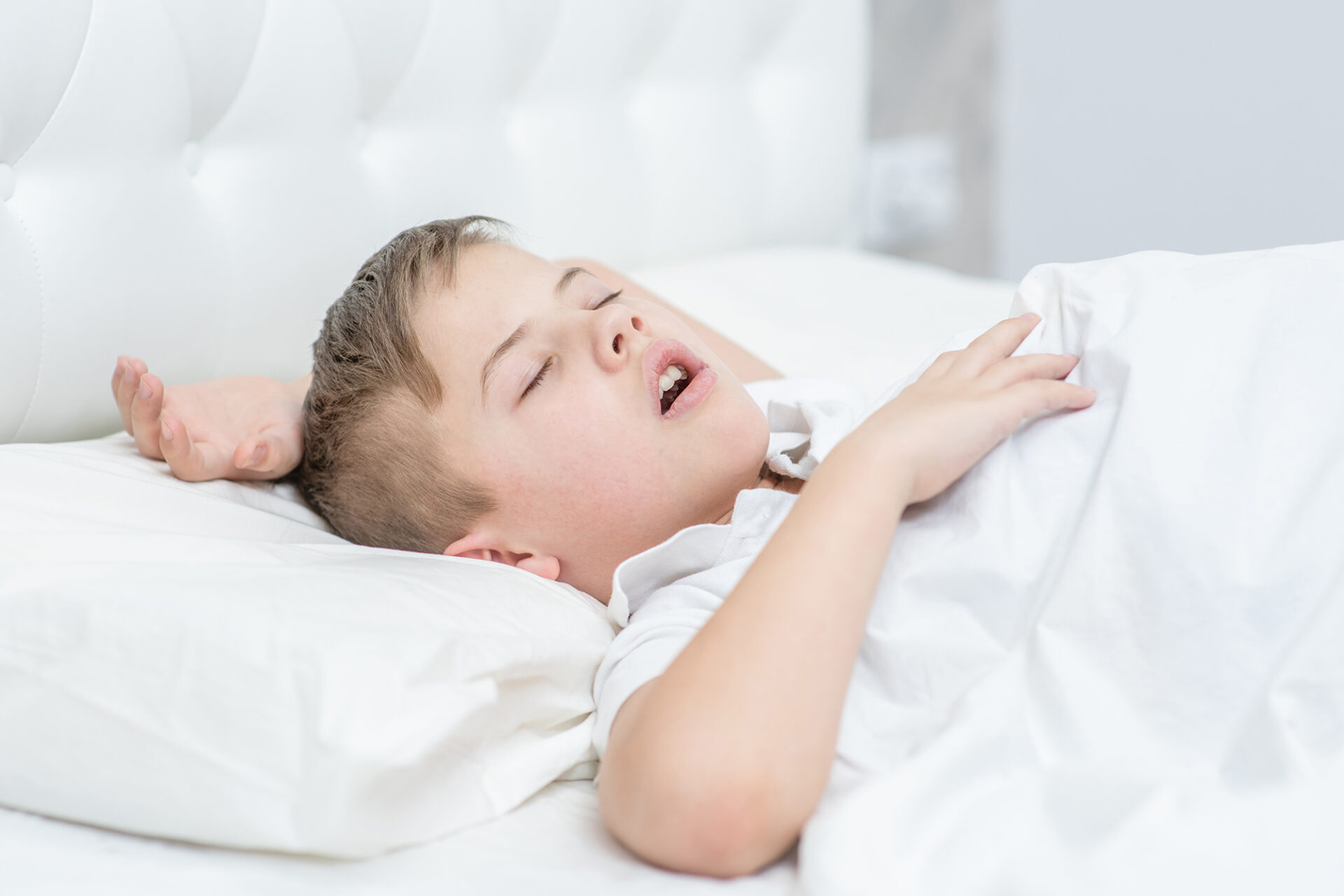
Sleep apnea is when a person stops breathing during sleep. It usually happens because something obstructs, or blocks, the upper airway. This is called obstructive sleep apnea (AP-nee-uh).
Obstructive sleep apnea (OSA) can make the body’s oxygen levels fall and interrupt sleep. This can make kids miss out on healthy, restful sleep. Untreated obstructive sleep apnea can lead to learning, behavior, growth, and heart problems.
When we sleep, our muscles relax. This includes the muscles in the back of the throat that help keep the airway open. In obstructive sleep apnea, these muscles can relax too much and collapse the airway, making it hard to breathe.
This is especially true if someone has enlarged tonsils or adenoids (germ-fighting tissues at the back of the nasal cavity), which can block the airway during sleep.
Other things that can make a child likely to have it include:
When breathing stops, oxygen levels in the body drop and carbon dioxide levels rise. This usually triggers the brain to wake us up to breathe. Most of the time, this happens quickly and we go right back to sleep without knowing we woke up.
This pattern can repeat itself all night in obstructive sleep apnea. So people who have it don’t reach a deeper, more restful level of sleep.
Signs of obstructive sleep apnea in kids include:
Because it’s hard for them to get a good night’s sleep, kids might:
Sleep apnea may increase sleep fragmentation, meaning that rather than experiencing the normal periods associated with each sleep stage, a child with apnea moves more frequently between deep and lighter stages of sleep. Research suggests that the longterm effects of sleep apnea in children include cognitive, behavioral, and psychosocial problems as well as growth delays and impacts on cardiovascular health.
Problems With Intellectual Development
Children with untreated sleep apnea may perform poorly on standardized tests of mental development. In a school-based study in India, children with sleep apnea were found to perform significantly less well in academic subjects than their peers. Other potential problems with intellectual development include lower scores on learning and memory metrics and on some types of intelligence quotient (IQ) tests. Children with the most severe apnea appear to also experience the most significant challenges to cognitive development.
Hyperactivity and Other Behavioral Problems
Unlike in adults—who become sleepy and sedate with sleep deprivation—children tend to become hyperactive. This may cause difficulties with attention and social behavior and may also contribute to anxiety and depression. Hyperactivity resulting from sleep apnea in children sometimes is misdiagnosed as Attention Deficit and Hyperactivity Disorder (ADHD).
An English study in the Journal of Thoracic Disease also showed that children with untreated apnea were more likely to exhibit poor social and communication skills and have difficulty regulating their behaviors. These traits are often experienced by caregivers as uncooperativeness or emotional volatility.
Inflammation
When sleep apnea continues over a long period in childhood, increasing markers of inflammation can also be found.3 Inflammation, in turn, can lead to a cascade of negative health outcomes such as compromised organ function.
Sleepiness During the Day
A child who is not getting enough restorative sleep at night could show signs of excessive sleepiness during the day.6 Babies and children need different amounts of sleep based on their age and stage, but if you notice your child napping longer or more frequently than usual or seeming tired when he or she is normally energetic, apnea could be the cause.
Issues with Growth
Sleep-disordered breathing in children is associated with negative effects on growth. Children with apnea may lose ground among their peers, or slow along their previous growth path, resulting in an inability to meet their full growth potential. This may be caused by frequent awakening from deep, slow-wave sleep which in turn could disrupt normal hormonal secretion, including growth hormones. In extreme circumstances, a child with apnea whose growth falls far below healthy levels may be diagnosed with failure to thrive.
Risk of Cardiovascular Problems
If left untreated, sleep apnea in children can result in certain cardiovascular problems. These include issues with blood pressure regulation, hypertension, and other precursors to cardiovascular events. During vigorous exercise, it’s also possible a child with untreated apnea will experience diminished cardiac performance.
Want to learn more? Browse our clinical resources and scientific publications on our comprehensive suite of targeted treatments.
Our clinical strategy focuses on high-level biological data and rigorous regulatory compliance to ensure safe and effective patient treatments.
We provide peer-reviewed scientific evidence and research studies that validate the effectiveness of bioelectric signaling in respiratory health improvement.
Our bioelectric protein expression technology addresses the underlying biological causes of sleep apnea. By combining advanced signaling with high-level digital scanning, we clear airway obstructions and stabilize structural re-alignment significantly faster than any competitive system.